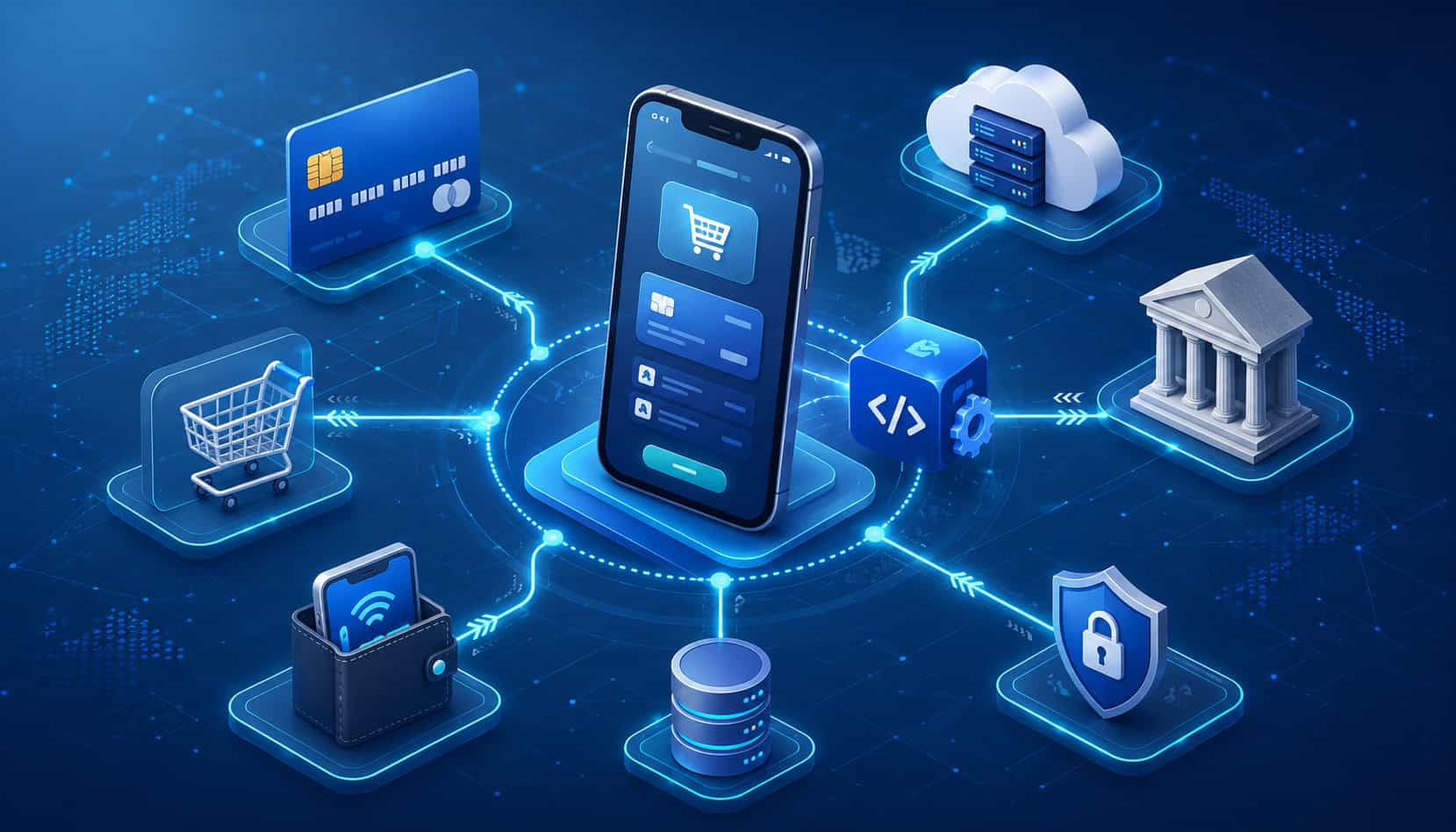
A payment API is the technology connection that lets a website, mobile app, ecommerce store, software platform, or business system communicate with payment tools.
It helps a business accept payments, send transaction details securely, receive approval or decline responses, issue refunds, save payment tokens, manage subscriptions, and pull payment reports without manually handling each step.
For many businesses, payments are no longer limited to a simple “pay now” button. An ecommerce seller may need a checkout API for shopping carts. A SaaS company may need a recurring payment API for subscription billing.
A marketplace may need embedded payments, split payouts, identity checks, and reporting. A service provider may need invoice payments, ACH payments, card payment API support, digital wallets, refunds API access, and payment reconciliation tools.
A payment API makes those workflows possible by allowing different systems to exchange payment instructions in a structured, secure way. The business system sends a request, the payment technology processes that request, and the system receives a response it can use to update an order, customer account, invoice, subscription, or accounting record.
This guide explains the payment API definition, how API payment processing works, where payment gateway API and payment processing API tools fit, what features matter most, and what businesses should review before using one.
Payment API Definition
A practical payment API definition is this: a payment API is a set of rules, endpoints, and secure instructions that allows business software to connect with payment infrastructure. It acts like a communication layer between the business application and the systems that authorize, capture, settle, refund, and report payments.
An API, or application programming interface, allows one software system to request a service from another software system. In payments, that service may be authorizing a card, creating a payment token, starting an ACH payment, saving a customer profile, charging a subscription, voiding an authorization, issuing a refund, or retrieving a settlement report.
A payment API is not usually visible to the customer. The customer sees a checkout page, mobile payment screen, invoice link, subscription portal, or hosted payment page. Behind that experience, the API sends payment data and transaction instructions to the correct payment gateway, payment processor, merchant account, bank, network, or wallet provider.
For example, when a customer enters card details at checkout, the website may use a tokenization API to replace sensitive card data with a secure token. The website then sends a payment authorization API request using that token, the order amount, and other transaction details. The payment system returns a response such as approved, declined, pending, or failed.
A payment API for businesses can support one-time payments, mobile payments, ecommerce payments, recurring billing, subscription billing, refunds, reporting, fraud prevention, chargebacks, and payment reconciliation. The exact features depend on the provider, payment methods, industry, and integration model.
Why Payment APIs Matter for Businesses
Payment APIs matter because they help businesses move from manual payment handling to automated, connected, and scalable payment operations.
A business that only accepts payments through disconnected tools may have to manually update orders, match deposits, issue refunds, track failed payments, and reconcile reports. That can work at a small scale, but it becomes inefficient as transaction volume grows.
With API payment integration, payment activity can connect directly to business workflows. An ecommerce store can mark an order as paid after authorization. A SaaS platform can activate an account after the first subscription payment.
A finance team can retrieve reporting API data for deposits, refunds, fees, and chargebacks. A customer support team can look up transaction details before answering refund questions.
A payment API also improves the checkout experience. Businesses can support online payments, mobile payments, card payments, digital wallets, ACH payments, saved payment methods, and recurring payment options in a way that fits the customer journey.
Instead of forcing customers through a clunky or disconnected process, the business can design a checkout flow that supports speed, clarity, and trust.
Payment APIs also reduce repetitive work. Refunds can be initiated from an internal dashboard. Failed recurring payments can trigger customer notifications. Subscription renewals can run automatically. Webhooks can update order, accounting, shipping, or customer relationship systems without someone manually checking payment status.
For startups and growing businesses, a digital payment API can also support faster product development. Developers can use payment SDKs, developer documentation, sandbox testing, and API keys to build a payment experience into the product instead of building payment infrastructure from scratch.
Payment APIs are especially useful when businesses need:
- Custom checkout flows
- Subscription billing and recurring billing
- Ecommerce payment API support
- Payment tokenization for saved cards
- Automated refunds and voids
- Real-time payment webhook updates
- Reporting and reconciliation data
- Fraud prevention and payment security tools
- Integration with accounting, order, or customer systems
The main value is not just accepting a payment. It is connecting the payment to the business process around it.
How a Payment API Works
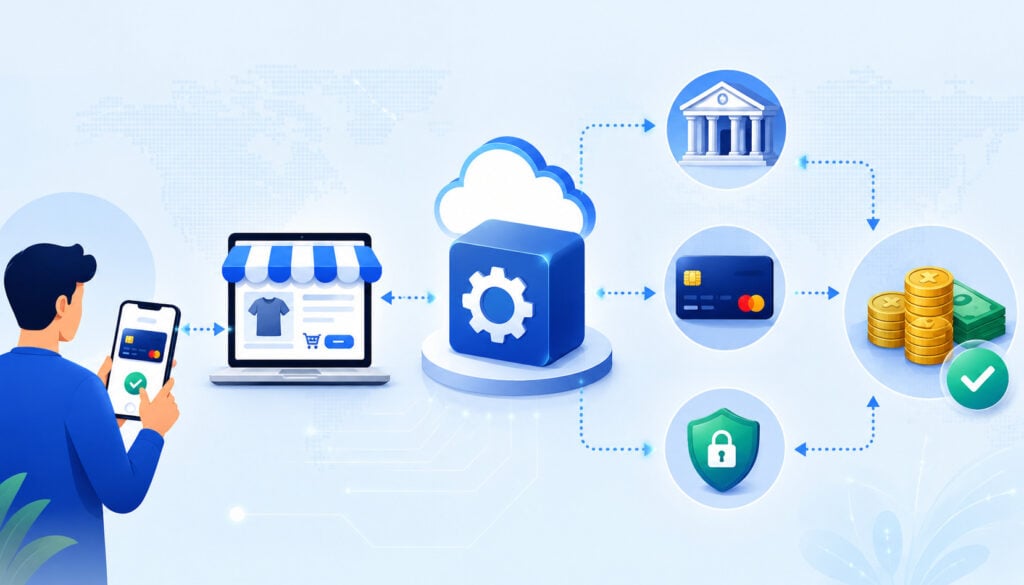
A payment API works by sending structured requests and responses between a business system and payment infrastructure. The exact flow varies by payment method, but most card and digital payment flows include checkout, tokenization, authorization, capture, settlement, webhook updates, reporting, and reconciliation.
The process usually starts when a customer chooses to pay. The customer may enter card details, select a digital wallet, approve an ACH payment, or use a saved payment method. Depending on the integration, the business may use a hosted payment page, embedded payment form, payment SDK, or custom checkout API to collect payment information.
Next, sensitive payment details are protected. Many payment APIs use payment tokenization so the business does not store raw card data. The tokenization API returns a secure reference, often called a token, that represents the payment method.
That token can be used for authorization, repeat purchases, or recurring billing without exposing full card details to the business system.
The business then sends an authorization request. A payment authorization API request typically includes the payment token, transaction amount, currency, customer details, order information, and fraud screening data.
The request travels through the payment gateway, payment processor, acquiring bank, card network, and issuing bank. The issuer approves or declines the transaction and returns a response.
If approved, the business may capture the payment immediately or later. Authorization confirms that the transaction can proceed. Capture tells the payment system to move the approved amount toward settlement. Some businesses authorize first and capture after shipping, service confirmation, or inventory validation.
After capture, the transaction moves toward clearing and settlement. A payment settlement API or reporting API may provide settlement status, batch IDs, deposit amounts, fees, and timing details.
Webhooks may notify business systems when events happen, such as payment succeeded, payment failed, refund completed, dispute opened, or subscription renewed.
Refunds and voids also use API requests. A void usually cancels an authorization before settlement. A refund returns funds after capture or settlement. Finance teams then use reports, transaction IDs, and deposit data to match sales, refunds, fees, and chargebacks during payment reconciliation.
Key Parties Involved in API Payment Processing
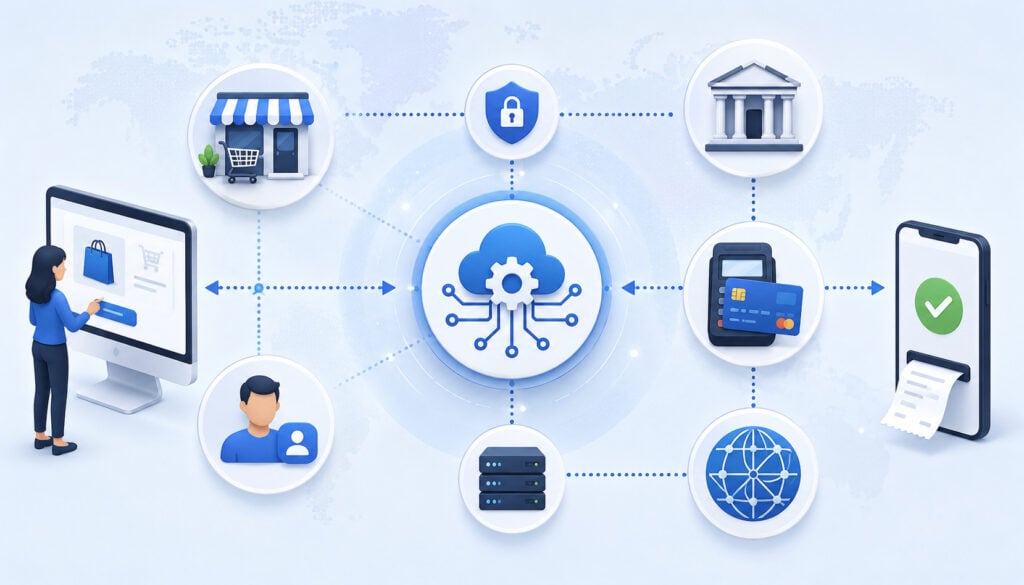
API payment processing involves more than the business and the customer. A payment API connects several parties that each perform a specific role. Understanding these roles helps business owners, developers, and finance teams troubleshoot payments and choose the right integration.
At the front end, the customer starts the transaction. The business provides the checkout experience through a website, app, invoice, subscription portal, or payment form. The developer or technical team configures the API payment integration so payment requests are sent securely and responses are handled correctly.
Behind the scenes, the payment gateway helps transmit transaction details securely. The payment processor routes payment information, communicates with banks and networks, and helps move the transaction through authorization, clearing, and settlement.
The merchant account or payment acceptance arrangement allows the business to receive card payment funds.
The acquiring bank works on the merchant side of the transaction. The issuing bank works on the customer side and decides whether to approve or decline a card transaction based on available funds, account status, risk signals, and other rules. The card network helps route the transaction between the acquiring and issuing sides.
For ACH payments, the ACH network supports electronic bank transfers. For digital wallets, a wallet provider may help authenticate the customer and pass secure payment credentials.
The Business, Customer, and Checkout Interface
The customer interacts with the visible payment experience. That may be a checkout page, mobile app, invoice payment screen, saved-card portal, donation form, or subscription management page. The customer expects the experience to be fast, clear, and secure.
The business controls the payment flow and decides which payment methods to offer. A retailer may focus on card payments and digital wallets. A SaaS platform may prioritize recurring billing and account-on-file payments. A service provider may need invoices, ACH payments, and saved payment methods. A marketplace may need embedded payments and payout logic.
The checkout interface should collect only the information needed for the payment and the order. It should make pricing, taxes, shipping, billing frequency, and refund expectations clear before payment submission. Good checkout design reduces errors, lowers customer confusion, and gives the API better data to process.
Developers connect the interface to the online payment API. They may use a payment SDK, hosted payment page, embedded payment fields, or direct API calls. Their job is to protect payment data, submit clean requests, handle declines, prevent duplicate charges, and update the business system when payment status changes.
The Gateway, Processor, Banks, and Networks
The payment gateway is often the first payment infrastructure layer that receives transaction instructions from the business system. It helps secure payment data, route requests, return status messages, and support tools such as tokenization, fraud screening, hosted checkout, and webhooks.
The payment processor handles the processing side of the transaction. It sends authorization requests through the appropriate rails, communicates with networks and banks, and supports clearing and settlement.
In some payment setups, the gateway and processor are separate. In others, the same payment system may provide gateway, processing, and merchant account services together.
The acquiring bank supports the merchant’s ability to accept payments and receive settlement funds. The issuing bank supports the customer’s payment account and approves or declines transactions.
The card network connects the acquiring and issuing sides for card payments. ACH payments use a different network for bank-to-bank transfers, and digital wallets may add authentication or tokenized credentials before the payment reaches the card or bank network.
When an authorization is approved, the API response does not always mean funds have been deposited. It means the payment has been approved for the next step. Capture, clearing, settlement, fees, returns, and chargebacks still need to be tracked.
Payment API vs Payment Gateway API vs Payment Processor API
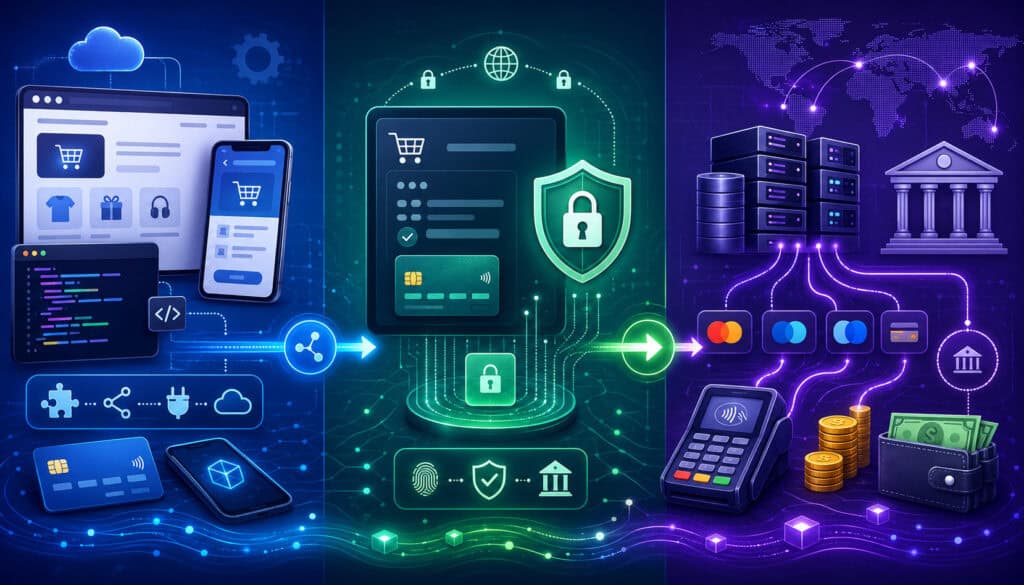
A payment API, payment gateway API, and payment processor API are closely related, but they are not always the same thing. The terms are sometimes used interchangeably because many modern payment systems combine several functions under one API. Still, the differences matter when comparing integrations.
A payment API is the broader term. It can include payment authorization, capture, refunds, tokenization, recurring billing, hosted payment page creation, digital wallets, ACH payments, payment webhook events, reporting API data, and reconciliation tools. It describes the API layer that lets business software manage payment workflows.
A payment gateway API usually focuses on securely transmitting transaction data between the business checkout and the payment ecosystem. It may handle card data collection, encryption, tokenization, fraud screening, authorization requests, and transaction status responses.
A gateway API is especially common in ecommerce payments because online payment data needs to be captured and routed securely.
A payment processing API or payment processor API may connect more directly to processor-level functions. This can include authorization, capture, settlement, transaction lookup, reversals, and processing reports. Some businesses use a processor API when they need deeper control over payment flows or direct integration with processing services.
The distinction often depends on the provider’s structure. Some payment providers offer gateway services only, meaning the business still needs a processor and merchant account. Others combine the payment gateway, payment processor, merchant account, hosted checkout, tokenization API, recurring payment API, fraud tools, and reporting dashboard into one setup.
For businesses, the question is less about terminology and more about capability. Can the API support the payment methods you need? Does it reduce PCI scope through hosted or embedded secure fields? Does it support webhooks, refunds, recurring billing, chargebacks, and reports? Does the developer documentation explain the difference between authorization, capture, settlement, and reconciliation?
For deeper technical comparisons, this resource on payment API architecture choices can help readers understand how API design affects payment workflows.
Common Payment API Features
A strong payment API usually supports more than one basic transaction endpoint. Businesses should look for features that match their payment use case, customer experience, security needs, and finance workflows.
Payment authorization is one of the core features. The API sends transaction details for approval and receives a response. Capture is another key feature.
Some transactions are captured immediately, while others are captured after order review, shipping, or service confirmation. Voids allow businesses to cancel certain authorizations before settlement, while refunds return funds after the payment has been captured.
Tokenization API support is important for saved payment methods, repeat purchases, and subscription billing. Payment tokenization replaces raw card details with a token that can be safely stored and reused according to the provider’s rules. This helps reduce exposure to sensitive payment data.
Recurring payment API features support subscription billing, membership billing, installment plans, usage-based billing, and automatic renewals. These tools may include payment retries, failed payment notifications, plan changes, cancellations, upgrades, downgrades, and customer account updates.
Payment webhooks provide real-time event updates. Instead of requiring the business system to keep checking transaction status, the payment system sends an event when something changes.
Common webhook events include payment succeeded, payment failed, refund completed, dispute opened, chargeback updated, subscription renewed, and settlement completed.
Reporting API and reconciliation features matter for finance teams. These tools help retrieve transaction IDs, settlement batches, deposits, fees, refunds, chargebacks, and payout records. Clean payment data makes it easier to match payment activity with orders, invoices, bank deposits, and accounting records.
Other common features include digital wallet support, ACH payments, hosted payment page options, embedded payments, fraud prevention tools, chargeback tools, developer documentation, payment SDKs, sandbox testing, mobile payments, and ecommerce payment API support.
Payment API Features Table
The table below summarizes common payment API features and why they matter for different business use cases.
| Feature | What It Does | Why It Matters | Common Business Use Case |
| Payment authorization API | Sends a payment request for approval | Confirms whether a transaction can proceed | Ecommerce checkout, invoices, app payments |
| Capture | Finalizes an approved authorization | Helps align payment capture with order fulfillment | Ship-after-approval retail workflows |
| Voids | Cancels an authorization before settlement | Avoids unnecessary refunds when a payment is not finalized | Cancelled orders or duplicate authorizations |
| Refunds API | Sends full or partial refund requests | Helps customer service handle returns efficiently | Product returns, service adjustments |
| Tokenization API | Replaces sensitive payment data with a token | Reduces exposure to raw card data | Saved cards, repeat purchases, subscriptions |
| Recurring payment API | Automates scheduled billing | Supports subscription billing and recurring billing | SaaS, memberships, retainers |
| Payment webhook | Sends real-time event notifications | Keeps business systems updated automatically | Failed payments, refunds, disputes, renewals |
| Reporting API | Retrieves transaction and settlement data | Helps finance teams reconcile payments | Accounting, deposits, fee review |
| Fraud prevention | Screens transactions for risk signals | Helps reduce unauthorized or suspicious activity | Ecommerce and card-not-present payments |
| Hosted payment page | Lets customers pay on a provider-hosted page | Can reduce development and security burden | Small business checkout, invoice payments |
| Embedded payments | Places payment flow inside software or a platform | Creates a more seamless customer experience | SaaS platforms, marketplaces, apps |
| Payment SDK | Provides prebuilt developer tools | Speeds up integration and reduces coding errors | Mobile apps, web apps, checkout forms |
A table like this is useful during provider selection because it separates “can accept payments” from “can support our full payment workflow.” Many businesses discover too late that they need features such as webhooks, subscription changes, partial refunds, chargeback records, or settlement reports.
Types of Payment APIs
There are different types of payment APIs because payment use cases vary. A retail checkout, invoice payment, subscription platform, marketplace, and mobile app may all need different payment flows.
An online payment API supports payments through websites, apps, customer portals, and digital invoices. It usually handles card payments, digital wallets, fraud checks, checkout responses, and order updates.
An ecommerce payment API is often designed around carts, products, taxes, shipping, order confirmations, and abandoned checkout recovery.
A card payment API focuses on credit and debit card payments. It may support authorization, capture, card verification, tokenization, refunds, and chargeback records. A checkout API may focus on building or launching a payment page, presenting available payment methods, collecting customer details, and returning checkout status.
A recurring payment API supports subscriptions, memberships, installment payments, and account-on-file transactions. It may include billing schedules, payment retries, failed payment notifications, renewal reminders, proration, plan changes, and cancellations.
An ACH payment API supports bank account payments. ACH payments can be useful for invoices, subscriptions, rent-like payments, B2B payments, and larger transactions where card costs may be a concern.
Businesses should review authorization requirements, return rules, settlement timing, and account verification options. For general ACH education, Nacha’s overview of how ACH payments work is a useful authority resource.
A digital wallet API supports wallet-based checkout and mobile payments. Wallets can reduce manual entry, support tokenized credentials, and improve mobile checkout convenience.
A refunds API helps customer support and operations teams process returns or adjustments. A reporting API helps finance teams retrieve transaction and settlement data. A marketplace payment API may support multiple sellers, split payments, onboarding, payout tracking, and platform-level reporting.
Online and Ecommerce Payment APIs
Online and ecommerce payment APIs are designed to support the buying process from checkout through order confirmation. The API may connect a shopping cart, product catalog, tax engine, shipping system, customer account, fraud tool, and order management system.
When a customer checks out, the ecommerce payment API sends transaction details such as amount, customer information, billing details, shipping details, cart contents, device data, and risk signals. The payment system returns a response that the store can use to confirm the order or show a clear decline message.
A good ecommerce flow also handles edge cases. If the customer clicks the payment button twice, the system should prevent duplicate payments. If the authorization succeeds but order creation fails, the system should know whether to capture, void, or retry. If a fraud review is needed, the order should not be fulfilled too early.
Ecommerce payment APIs also support post-purchase workflows. Businesses may need partial captures, partial refunds, shipping-related adjustments, failed payment notices, and transaction lookup. These details matter because payment problems often become customer service problems.
Recurring and Subscription Payment APIs
Recurring and subscription payment APIs support payments that happen on a schedule. This is common for SaaS companies, memberships, subscription boxes, service retainers, donations, financing-style plans, and account-based billing.
A recurring payment API stores a payment token, creates a billing schedule, charges the customer on the correct date, and updates the business system with the result. If the payment succeeds, the subscription continues. If it fails, the API may trigger retry logic, customer notifications, account grace periods, or service limits.
Subscription billing often needs more than a simple monthly charge. Businesses may need free trials, setup fees, prorated upgrades, downgrades, coupons, usage-based billing, cancellations, reactivations, and expired card handling. The API should also support customer communication so users know when payments fail or billing details need to be updated.
Failed recurring payments require careful handling. Too many retries can frustrate customers or increase risk. Too few retries can create avoidable churn. The best setup balances customer experience, payment recovery, and compliance responsibilities.
Hosted Checkout vs Embedded Payment API
Businesses usually choose between hosted checkout, embedded checkout, or a more custom API payment integration. Each option affects control, development effort, customer experience, security responsibility, and PCI compliance scope.
A hosted payment page sends customers to a secure page hosted by the payment provider. The provider handles much of the payment form, sensitive data collection, and security maintenance.
Hosted checkout can be faster to launch and may reduce the business’s exposure to raw payment data. It is often a good fit for smaller teams, invoice payments, simple ecommerce, and businesses without deep development resources.
A redirect checkout is a type of hosted flow where the customer temporarily leaves the business site to complete payment. Modern hosted pages can still support branding and mobile-friendly layouts, but the business usually has less control over the exact design and behavior.
An embedded payment API allows payment fields or checkout components to appear inside the business website, app, or platform while sensitive payment data is still handled through secure provider-controlled elements. This can offer a smoother customer experience while helping reduce direct handling of card details.
A fully custom API payment integration gives the business the most control. Developers can design the checkout, payment logic, user experience, subscription flow, and backend operations in detail.
This can be valuable for SaaS platforms, marketplaces, mobile apps, complex ecommerce, and embedded payments. However, it also requires more development, testing, security review, maintenance, and compliance planning.
A helpful comparison of API and hosted payment page integrations can help teams think through control, convenience, and implementation effort.
What Businesses Need Before Using a Payment API
Before using a payment API, businesses should prepare the operational, technical, financial, and compliance pieces that support payment acceptance. A payment API is not a standalone business process. It works best when the business already understands what it needs payments to do.
First, define the payment use case. Are you selling products online? Billing subscriptions? Taking deposits? Sending invoices? Charging for appointments? Supporting mobile payments? Managing a marketplace? Each use case affects the API features required.
Second, confirm the payment acceptance setup. The business may need a merchant account, payment provider account, gateway setup, processing agreement, or other arrangement that allows funds to be accepted and settled. Teams should understand how deposits work, what fees may apply, how disputes are handled, and how settlement reports will be accessed.
Third, review the website, app, or business system where payments will be added. Developers should know where checkout appears, how customer data is stored, how orders are created, how invoices are marked paid, and how errors are shown. Finance teams should know how transaction data will flow into accounting and reconciliation processes.
Businesses should also prepare refund rules, cancellation policies, fraud prevention settings, customer support procedures, and staff training. Developers should review API keys, sandbox testing, webhook setup, payment SDK options, tokenization, encryption requirements, and developer documentation.
Security and PCI compliance planning are essential. Businesses should understand what payment data touches their systems, what is handled by third-party tools, and what responsibilities remain with the business.
The PCI Security Standards Council provides merchant resources for securing payment data that can help teams understand the importance of people, processes, and technology.
Payment API Integration Process
A payment API integration should follow a structured process. Rushing straight into coding can lead to duplicate payments, poor error handling, weak security, missing reports, and reconciliation problems.
Start by defining the payment use case. Document whether the payment is one-time, recurring, invoice-based, ecommerce, mobile, ACH, card-based, wallet-based, or marketplace-related. Then choose the payment flow: hosted payment page, embedded checkout, payment SDK, or custom API integration.
Next, review the developer documentation. Developers should understand endpoints, request fields, response codes, authentication, API keys, tokenization, webhooks, sandbox testing, error handling, rate limits, and versioning. Finance and operations teams should review reporting, refunds, settlement, chargebacks, and reconciliation tools.
Create sandbox credentials and build the payment form or checkout flow. Use the sandbox environment to test approvals, declines, expired cards, incorrect security codes, insufficient funds, duplicate submissions, timeouts, refund requests, voids, webhook events, and settlement-like reports.
Sensitive payment data should be tokenized whenever possible. The business system should store tokens, transaction IDs, customer IDs, and status details rather than raw card data. Authorization requests should be submitted securely, and the system should clearly handle approvals, declines, pending results, and errors.
Configure payment webhooks so real-time events update internal systems. Test webhook signatures, retries, duplicate event handling, and event ordering. A payment webhook may arrive before or after a customer returns to the website, so the backend system should treat webhook events as important source-of-truth updates.
Before launch, review security controls, PCI compliance responsibilities, logging practices, access permissions, staff workflows, refund procedures, and monitoring. After launch, watch approval rates, failed payments, checkout errors, dispute patterns, and reconciliation gaps.
Sandbox Testing and Developer Documentation
Sandbox testing matters because payment failures are not always obvious during development. A checkout may work for a successful test card but fail when a customer uses an expired card, enters an incorrect security code, loses connection, clicks twice, changes billing details, or closes the browser during payment.
A sandbox environment lets developers test payment behavior without moving real funds. Good sandbox testing should include simulated approvals, declines, fraud flags, expired cards, incorrect card data, duplicate requests, refund testing, void testing, webhook testing, failed recurring payments, ACH return scenarios where available, and mobile checkout behavior.
Developer documentation should explain how the API works and how to handle edge cases. Strong documentation usually includes authentication steps, API key setup, request examples, response examples, error codes, webhook events, SDK installation, testing credentials, versioning notes, security guidance, and sample workflows.
Developers should test more than the payment button. They should test what happens after payment approval, after payment failure, after a webhook delay, after a refund, after a subscription renewal, after a chargeback, and after settlement reports are generated.
Finance teams should test whether reports match the fields they need for accounting and payment reconciliation.
Sandbox testing should also include browser and device checks. Mobile payments can fail if payment fields do not resize properly, wallet buttons do not display correctly, or redirect flows break inside an in-app browser. Testing should cover common browsers, mobile screens, tablets, and slower network conditions.
API Keys, Authentication, and Secure Access
Payment APIs use authentication to confirm that requests are coming from an authorized system. Common access tools include API keys, secret keys, public keys, access tokens, OAuth-like flows, signed requests, and permission-based credentials.
API keys are credentials used to identify and authenticate an application. Some keys are safe for limited front-end use, while secret keys must stay on secure servers.
A public key may help initialize secure payment fields, but a secret key can create charges, issue refunds, or access sensitive data. Exposing a secret key in public code, browser scripts, mobile apps, or public repositories can create serious risk.
Businesses should store API credentials securely. Keys should not be hardcoded into public files, shared through unsecured messages, or placed in client-side code unless the documentation clearly says that key type is meant for public use. Secret credentials should be stored in secure environment variables, secret managers, or other controlled systems.
Access should follow the least-privilege principle. A reporting-only tool does not need refund permissions. A checkout service may not need dispute management access. Staff dashboards should require appropriate user roles, and production credentials should be limited to authorized personnel.
Credential rotation is also important. If an employee leaves, a vendor changes, a developer device is compromised, or a key may have been exposed, businesses should rotate credentials and review logs. Production and sandbox keys should be separated so test activity cannot affect real customers.
For API security education, the OWASP API Security Top Ten is a helpful reference for understanding common API risk categories.
Tokenization and Saved Payment Methods
Tokenization is one of the most important payment security concepts in API payment processing. Payment tokenization replaces sensitive payment details with a secure reference called a token. The token can be stored and used for future transactions, but it is not the same as storing raw card data.
For example, when a customer saves a card for future purchases, the tokenization API may send the card details directly to the payment system through secure fields. The payment system returns a token.
The business stores the token, not the full card number. Later, the business can use the token to charge the customer again, depending on customer authorization and payment rules.
Tokenization matters for repeat purchases, subscription billing, membership renewals, account-on-file transactions, and mobile payments. It makes checkout faster because returning customers do not need to re-enter full payment details. It also reduces the amount of sensitive data the business stores or processes.
Tokenization does not remove all responsibility. Businesses still need strong access controls, secure coding practices, encrypted connections, webhook verification, clean logs, and PCI compliance awareness. A token can still be misused if an attacker gains access to systems that can charge it.
Saved payment methods should be handled carefully. Customers should know when a payment method is being saved, how it will be used, how to update it, and how to remove it. Subscription businesses should clearly explain billing frequency, trial terms, renewal timing, and cancellation rules.
A tokenization API is most effective when paired with good customer communication, secure permissions, and thoughtful payment design.
Webhooks and Real-Time Payment Updates
A payment webhook is an automated message sent by the payment system to the business system when a payment event occurs. Webhooks are important because payment activity does not always finish while the customer is still on the checkout page.
For example, a customer may submit a payment and close the browser. A card authorization may succeed, but a later capture may fail. An ACH payment may be initiated and later return. A refund may take time to complete.
A chargeback may be opened days after the original payment. A subscription payment may fail overnight. Webhooks help the business system learn about these events without manual checking.
Common payment webhook events include:
- Payment succeeded
- Payment failed
- Authorization approved
- Capture completed
- Refund created
- Refund completed
- Subscription renewed
- Subscription payment failed
- Payment method updated
- Chargeback opened
- Dispute status changed
- Settlement completed
Webhooks should be verified. Most payment systems provide a signature or verification method so the business can confirm the webhook came from the expected source. Without verification, attackers may try to send fake events to mark orders as paid or manipulate account status.
Businesses should also design webhook handling for retries and duplicates. A payment system may send the same event more than once if it does not receive a successful response. The business system should process each event safely without creating duplicate orders, duplicate refunds, or incorrect subscription changes.
Security and PCI Compliance for Payment APIs
Payment security should be planned before launch, not added after problems appear. A payment API can support secure payment flows, but the business still has responsibilities for implementation, access control, testing, monitoring, and compliance.
PCI compliance refers to payment card data security responsibilities for organizations that store, process, or transmit cardholder data. The exact scope depends on the payment flow.
A hosted payment page may reduce the amount of card data that touches the business system. Embedded secure fields may also reduce exposure. A fully custom payment form can increase responsibility if sensitive data flows through business-controlled systems.
Businesses should use HTTPS, encryption, secure payment forms, tokenization, strong authentication, least-privilege access, secure coding practices, safe logging, and webhook verification. They should avoid storing raw card data unless they have a clearly justified need, proper controls, and qualified guidance.
Payment page security also matters. Scripts running on checkout pages can create risk if they are not managed carefully. PCI resources on payment page security and preventing e-skimming explain why payment-page scripts, integrity checks, and monitoring are important for ecommerce security.
Fraud prevention is another part of payment security. Fraud tools may review device information, billing details, shipping patterns, transaction velocity, customer history, and risk signals. However, fraud settings should be tuned carefully. Rules that are too loose may increase risk, while rules that are too strict may block good customers.
This guide is not formal compliance advice. Businesses should work with qualified payment, security, legal, or compliance professionals when determining their specific obligations.
Common Payment API Security Mistakes
Payment API security mistakes often come from shortcuts, rushed launches, or misunderstanding where responsibilities sit. Many mistakes are preventable with planning and testing.
One major mistake is exposing API keys. Secret keys should never appear in public code, browser tools, mobile app bundles, public repositories, or unsecured documentation. If a secret key is exposed, unauthorized users may be able to create payments, issue refunds, or retrieve sensitive data depending on permissions.
Another mistake is storing raw card data unnecessarily. Businesses should use tokenization, hosted payment fields, or secure provider-controlled collection methods whenever possible. Storing raw payment data increases security responsibility and risk.
Skipping HTTPS is also serious. Payment forms, API requests, customer portals, admin dashboards, and webhook endpoints should use encrypted connections. Businesses should also avoid logging sensitive payment data.
Logs are useful for troubleshooting, but they should not contain full card numbers, security codes, secret keys, or unnecessary personal data.
Webhook mistakes are common. Some teams accept webhook events without verifying signatures. Others process duplicate webhook events as if they were new. Some fail to monitor webhook delivery failures, which can cause orders, subscriptions, or refunds to fall out of sync.
Weak access controls can create internal risk. Not every staff member should have permission to refund payments, export reports, view customer payment tokens, or change API settings. Businesses should review roles and permissions regularly.
Other mistakes include failing to rotate credentials, not testing fraud scenarios, ignoring API version changes, relying only on front-end payment status, and not documenting payment workflows for support and finance teams.
Payment API Costs and Fees
Payment API costs can include more than the transaction fee. Businesses should review the full cost of accepting, managing, securing, and reconciling payments.
Transaction fees are the most visible cost. These may apply to card payments, ACH payments, digital wallet payments, mobile payments, or other payment methods. Fees can vary based on payment type, risk level, card type, transaction channel, business category, volume, and provider agreement.
Gateway fees may apply when a payment gateway is used to route transactions. Some arrangements include monthly gateway fees, per-transaction gateway fees, batch fees, or additional feature fees. Other setups bundle gateway functions into broader payment processing pricing.
Developer costs are also important. A hosted payment page may require less custom development, while a fully custom API payment integration may require more planning, coding, testing, security review, and maintenance. Businesses should budget for ongoing updates, not just the first launch.
Additional costs may include fraud prevention tools, recurring billing features, chargeback fees, refund costs, reporting exports, platform fees, ACH return fees, digital wallet fees, PCI-related costs, and support or maintenance expenses.
Businesses should also consider operational costs. Poor reporting can make reconciliation more time-consuming. Weak decline handling can increase lost revenue. Incomplete refund workflows can create support delays. A cheaper API can become expensive if it creates manual work or reliability problems.
No payment API has one universal price structure. Businesses should review actual contract terms, transaction types, volume assumptions, payment methods, refund policies, dispute exposure, and reporting needs before making a decision.
Payment API Cost Table
| Cost Area | What It Means | When It May Apply | What Businesses Should Review |
| Transaction fees | Cost charged per payment | Card, ACH, wallet, or online payments | Rate structure, minimums, volume assumptions |
| Gateway fees | Cost for gateway access or routing | Separate gateway setups | Monthly fees, per-transaction fees, batch costs |
| Developer costs | Time and labor to build integration | Custom checkout or embedded payments | Initial build, testing, maintenance |
| Recurring billing fees | Cost for subscription tools | Memberships, SaaS, installments | Billing schedules, retries, plan changes |
| Fraud tool costs | Cost for risk screening features | Ecommerce or card-not-present payments | Included tools, add-on tools, false declines |
| Chargeback fees | Fees related to disputes | Card payment disputes | Evidence tools, alerts, operational process |
| ACH fees | Costs for bank account payments | Invoices, subscriptions, larger payments | Return fees, verification costs, timing |
| PCI-related costs | Security and compliance expenses | Card payment acceptance | Validation, scans, audits, professional support |
| Reporting costs | Cost for advanced exports or API access | Finance and accounting workflows | Settlement data, fees, deposits, formats |
| Maintenance costs | Ongoing updates and monitoring | Any API integration | API version changes, SDK updates, bug fixes |
Cost should be evaluated alongside reliability, security, customer experience, and operational fit. A payment API that saves support time, reduces reconciliation work, and lowers failed payments may be worth more than an option with a lower headline fee.
Payment APIs for Cards, ACH, and Digital Wallets
Payment APIs often support multiple payment methods, including credit cards, debit cards, ACH payments, digital wallets, mobile payments, invoices, recurring billing, and account-on-file transactions. The right mix depends on customer preference, transaction size, cost, risk, settlement timing, and integration requirements.
Cards are common for ecommerce payments because customers are familiar with them, authorizations are fast, and payment status is usually available quickly.
A card payment API may support authorization, capture, tokenization, refunds, voids, card account updates, and chargeback records. Card payments can be convenient but may involve higher costs and greater dispute exposure than some alternatives.
ACH payments move funds between bank accounts. They can be useful for larger invoices, recurring billing, B2B payments, service payments, memberships, and bank-based payment flows. ACH payments may have different authorization rules, settlement timing, return windows, and verification requirements than card payments.
Digital wallets can improve checkout convenience, especially on mobile devices. Wallets may use tokenized credentials and device-level authentication, reducing manual data entry. A digital payment API that supports wallets can help customers complete purchases with fewer steps.
Pay-by-bank and account-based payment options are also growing in relevance for certain business models. For readers exploring bank-connected payment experiences, this overview of pay-by-bank payment options provides additional context.
Businesses should choose payment methods based on fit, not popularity alone. A subscription platform may need card-on-file and ACH. A mobile app may prioritize digital wallets. A B2B service provider may value invoices and bank payments. An ecommerce store may need cards, wallets, fraud tools, and fast checkout.
Handling Declines and Failed Payments
Declines and failed payments are normal in payment processing. A good payment API integration should handle them clearly, safely, and respectfully.
Common decline reasons include insufficient funds, expired cards, incorrect card numbers, incorrect security codes, issuer declines, suspected fraud, velocity limits, billing address mismatch, inactive accounts, expired tokens, and network timeouts. Some declines are final, while others may be retried after the customer updates payment information.
The customer-facing message should be helpful without revealing sensitive risk details. For example, a message can ask the customer to check payment details or use another payment method. It should not expose internal fraud rules or technical codes that confuse the customer.
For recurring billing, failed payments require a recovery process. The recurring payment API may retry the payment on a schedule, send a customer notification, request updated payment details, apply a grace period, or pause access after repeated failures. The process should be documented and consistent.
Duplicate payment prevention is also important. If the API times out, the business system should not automatically create another charge without checking transaction status. Idempotency keys or duplicate prevention tools can help ensure repeated requests do not create repeated payments.
Developers should log useful technical details without logging sensitive payment data. Support teams should have enough information to help customers, such as transaction status, decline category, payment method type, and next steps.
Refunds, Voids, Chargebacks, and Disputes
A payment API should support the post-payment events that happen after checkout. Refunds, voids, chargebacks, and disputes affect customer service, finance, inventory, and reporting.
A void cancels an authorization before the transaction is captured or settled. Voids are useful when an order is cancelled quickly, inventory is unavailable, or a duplicate authorization is detected before funds move further through the payment process.
A refund returns funds after a payment has been captured. Refunds can be full or partial depending on provider support and business policy. A refunds API can help customer support teams process returns from an internal tool while keeping transaction records connected to the original payment.
Chargebacks and disputes are different from refunds. A chargeback occurs when a customer disputes a transaction through their card issuer or financial institution. The business may need to provide evidence such as order records, shipping confirmation, customer communication, refund policy acceptance, usage logs, or service delivery details.
Payment APIs may help retrieve dispute details, upload evidence, track deadlines, receive chargeback webhook events, and update internal records. Even when the dispute process is handled through a dashboard, the API can help keep support and finance systems aligned.
Businesses should document refund rules, staff permissions, approval thresholds, and customer communication templates. They should also track refund rates, chargeback trends, fraud patterns, and product or service issues that may cause payment disputes.
Reporting, Reconciliation, and Accounting Integration
Reporting and reconciliation are where payment APIs become especially valuable for finance teams. Accepting a payment is only the first step. Businesses also need to know when funds settle, which fees were deducted, which refunds were processed, which chargebacks occurred, and which deposits match bank activity.
A reporting API may provide transaction IDs, authorization IDs, capture IDs, refund IDs, settlement batch IDs, deposit dates, gross amounts, fees, net amounts, currency details, payment method types, customer IDs, invoice IDs, and order references. These fields help connect payment activity with business records.
Payment reconciliation compares internal records with payment reports and bank deposits. Clean data matters because a single deposit may include many transactions, refunds, fees, and adjustments. Without consistent transaction IDs and reporting fields, finance teams may spend unnecessary time matching records manually.
Accounting integration can also improve accuracy. Payment data may flow into accounting software, enterprise systems, billing tools, or reporting dashboards. Businesses should map fields carefully so sales, taxes, refunds, chargebacks, and fees are categorized correctly.
Reconciliation should be reviewed daily or on a regular schedule based on volume. Delayed reconciliation can hide missing deposits, duplicate payments, refund errors, fee surprises, and dispute activity.
A useful payment processing API should support both developers and finance teams. Developers need stable endpoints and clear responses. Finance teams need accurate reports, exportable data, settlement visibility, and consistent identifiers.
Common Payment API Problems
Payment API problems can be technical, operational, or both. A checkout issue may start as a code problem but quickly become a customer support issue. A reporting gap may start as a missing field but become a finance problem at month-end.
Common technical problems include invalid credentials, failed authentication, incorrect endpoint URLs, request formatting errors, missing required fields, unsupported payment methods, API timeouts, duplicate submissions, webhook failures, SDK compatibility issues, and API version changes.
Common payment workflow problems include authorization and capture mismatches, refund delays, unclear decline messages, settlement reporting gaps, failed recurring payments, expired tokens, checkout errors, and mobile payment failures.
Technical API Problems
Technical API problems often happen when requests are not formatted according to developer documentation. A missing amount field, incorrect customer ID, invalid token, wrong environment key, or malformed webhook endpoint can break a payment flow.
Timeout handling is especially important. If the business system does not receive a response, it should check transaction status rather than blindly submitting another charge. Idempotency controls can help prevent duplicate payments when customers click twice or when a request is retried.
Webhook signature verification can also cause issues. If verification is configured incorrectly, valid events may be rejected. If verification is skipped, fake events may be accepted. Developers should test webhook delivery, retries, duplicate events, and event ordering.
SDK compatibility and API version changes should be monitored. A payment SDK may need updates for security patches, browser changes, or provider changes. Teams should document API versions and review release notes before upgrading.
Business and Operational Problems
Operational payment problems often come from unclear rules or poor handoffs. If refund policies are not documented, support staff may process inconsistent refunds. If fraud settings are too aggressive, good customers may be blocked. If fraud settings are too weak, risky orders may be fulfilled too quickly.
Reconciliation gaps can create finance problems. Missing transaction IDs, inconsistent order references, and incomplete settlement reports make it harder to match deposits. Staff training is also important. Customer support should understand payment statuses, decline categories, refund timing, and escalation steps.
Customer communication can prevent many problems. Customers should understand when they are charged, how subscriptions renew, how to update payment methods, when refunds are issued, and how to contact support.
Support delays also matter. A technically strong API still creates frustration if the business cannot resolve payment issues quickly. Payment operations should include escalation paths for developers, finance, support, and provider contacts.
Best Practices for Using a Payment API
The best payment API integrations are secure, tested, documented, and monitored. Businesses should treat payments as an ongoing operational system, not a one-time technical project.
Start by protecting API keys. Store secret credentials securely, separate sandbox and production environments, limit access, and rotate credentials when needed. Use tokenization for saved payment methods and avoid storing raw card data unless there is a clearly justified and properly controlled need.
Verify webhooks and design webhook handling for duplicates, retries, and delayed delivery. Use idempotency tools or duplicate prevention logic to avoid charging customers more than once. Test approvals, declines, refunds, voids, failed recurring payments, browser issues, mobile issues, and timeout scenarios.
Document payment workflows. Developers, finance teams, support staff, and managers should understand how payments move from checkout to settlement. Documentation should explain statuses, refund rules, subscription billing behavior, dispute workflows, reconciliation steps, and escalation contacts.
Monitor payment performance after launch. Track approval rates, decline categories, checkout errors, failed renewals, refund rates, chargebacks, webhook failures, and reconciliation exceptions. Payment data can reveal customer experience issues and operational weaknesses.
Maintain PCI compliance awareness and work with qualified professionals when needed. Security should include encrypted connections, secure coding, access controls, safe logs, fraud prevention, payment page monitoring, and regular reviews. The FTC’s small business cybersecurity guidance is also useful for broader security awareness.
How to Choose the Right Payment API
Choosing the right payment API starts with your business model. An ecommerce store, SaaS platform, marketplace, professional service, nonprofit, mobile app, and B2B seller may all need different payment features.
Review supported payment methods first. Does the API support cards, ACH payments, digital wallets, mobile payments, invoices, recurring billing, and account-on-file transactions? Does it support the payment methods your customers actually want to use?
Next, review developer documentation. Clear documentation, sample requests, SDKs, sandbox testing, webhook guides, error code explanations, and versioning details can reduce integration time and mistakes. Poor documentation can slow down even experienced developers.
Evaluate security and PCI scope. Does the provider offer hosted payment pages, embedded secure fields, tokenization, encryption, fraud prevention, webhook verification, and role-based access? Can your team understand and maintain the required controls?
Reporting is equally important. Finance teams should review settlement reports, fee visibility, refund data, chargeback records, deposit details, export formats, and reporting API access. A payment API that works well for developers but poorly for accounting can create long-term problems.
Also review reliability, support quality, pricing transparency, integration flexibility, scalability, contract terms, data portability, and compatibility with existing systems. Ask how the API handles refunds, chargebacks, failed payments, API downtime, webhook retries, and version changes.
Use a checklist before launch:
- Payment use case defined
- Payment methods selected
- Merchant account or provider setup complete
- API documentation reviewed
- Sandbox testing completed
- Security controls configured
- API keys protected
- Webhooks tested
- Refunds and declines tested
- Reporting and reconciliation reviewed
- Staff trained
- Compliance responsibilities understood
- Launch monitoring plan prepared
For additional implementation context, these secure payment integration resources may help readers compare payment integration approaches.
Common Misconceptions About Payment APIs
One common misconception is that a payment API automatically handles all compliance. A payment API can reduce some responsibilities, especially when using hosted payment pages or secure embedded fields, but businesses still need to understand their own systems, data flows, staff access, and validation requirements.
Another misconception is that all payment APIs are the same. Some APIs only support basic checkout. Others support tokenization, subscriptions, webhooks, ACH payments, digital wallets, refunds, disputes, reporting, and reconciliation. Businesses should compare actual features, not just labels.
Many people also assume that an approval means money has already been deposited. Approval usually means the transaction has been authorized. Capture, clearing, settlement, fees, refunds, and chargebacks still need to be tracked.
Some teams believe developers can safely store card data by default. That is risky. Businesses should avoid storing raw card data unless they have a legitimate need, strong controls, and qualified guidance. Tokenization and hosted or embedded secure collection methods are often better options.
Another misconception is that webhooks are optional. For simple payments, a business may be tempted to rely only on the customer return page. But webhooks are critical for events that happen after checkout, including refunds, failed payments, subscription renewals, settlement updates, and disputes.
Finally, some businesses underestimate checkout design. Payment reliability is not only about backend code. Clear pricing, mobile-friendly forms, helpful error messages, trust signals, and simple payment steps can all affect completion rates and customer satisfaction.
Final Thoughts on Payment APIs
A payment API helps businesses create secure, flexible, automated, and scalable payment experiences. It connects business systems to payment gateways, processors, banks, networks, ACH payment rails, digital wallets, and reporting tools so payments can be authorized, captured, settled, refunded, disputed, and reconciled.
The best payment API setup depends on the business model. A simple service business may prefer a hosted payment page. An ecommerce seller may need an ecommerce payment API with fraud tools and refund support.
A SaaS company may need a recurring payment API with subscription billing, payment retries, webhooks, and saved payment methods. A platform may need embedded payments, reporting, and advanced workflow automation.
Successful use requires more than technical integration. Businesses should define payment use cases, protect API keys, use payment tokenization, verify webhooks, test edge cases, monitor declines, reconcile payment data, train staff, and understand PCI compliance responsibilities.
A payment API is powerful because it connects payment activity to the systems that run the business. When planned carefully, it can reduce manual work, improve customer experience, support online payments and mobile payments, and give teams better control over payment operations.
What is a payment API?
A payment API is a secure software connection that allows a website, app, ecommerce store, SaaS platform, or business system to communicate with payment technology. It can help create transactions, authorize payments, capture funds, save payment tokens, issue refunds, manage recurring billing, receive webhooks, and retrieve reports.
The customer usually does not see the API itself. They see a checkout page, invoice, mobile payment screen, hosted payment page, or subscription portal. The API works behind the scenes to send payment instructions and return payment status updates.
What is the payment API definition?
The payment API definition is a set of endpoints, rules, credentials, and data formats that allow business software to request payment services from a payment system. These services may include payment authorization, tokenization, capture, refunds, subscription billing, chargeback data, settlement reporting, and reconciliation.
In simple business terms, it is the connection that lets your software talk to the payment infrastructure needed to accept and manage payments.
How does an online payment API work?
An online payment API works by collecting payment details through a secure checkout flow, protecting sensitive information through tokenization or secure fields, sending an authorization request, receiving an approval or decline response, and updating the business system.
After the initial payment, the API may also support capture, settlement updates, refunds, payment webhook events, reporting, and reconciliation. The exact flow depends on the payment method and integration model.
Is a payment API the same as a payment gateway?
Not always. A payment gateway helps securely transmit payment data and route transactions. A payment API is a broader term that may include gateway functions plus authorization, capture, tokenization, refunds, subscriptions, webhooks, reporting, and reconciliation.
Some systems combine gateway, processor, and merchant account features. Others separate them. Businesses should review what the API actually supports.
What is API payment processing?
API payment processing is the use of APIs to manage payment workflows between business software and payment infrastructure. It may include sending authorization requests, capturing payments, issuing refunds, saving tokens, receiving webhook updates, and pulling payment reports.
It helps businesses automate payment tasks and connect payment activity with orders, invoices, subscriptions, customer accounts, and accounting systems.
Do businesses need developers to use a payment API?
Many payment API integrations require developers, especially embedded payments, custom checkout flows, mobile apps, SaaS billing, marketplaces, and complex ecommerce workflows. Developers review documentation, configure API keys, build payment forms, set up webhooks, and test edge cases.
However, some hosted payment pages and payment links require less technical work. The right choice depends on how much control, customization, and automation the business needs.
What is a payment gateway API?
A payment gateway API is an API that lets business software connect with a payment gateway. It usually helps collect or transmit payment data securely, request authorizations, return transaction responses, tokenize payment methods, and support refunds or status lookups.
A gateway API is common for ecommerce payments because it helps connect online checkout to the payment ecosystem.
What are payment webhooks?
Payment webhooks are automated event messages sent from the payment system to the business system. They notify the business when events happen, such as payment succeeded, payment failed, refund completed, chargeback opened, subscription renewed, or settlement completed.
Webhooks are important because not every payment event happens while the customer is still on the checkout page. Businesses should verify webhook signatures and handle duplicate events safely.
Is a payment API secure?
A payment API can be secure when implemented correctly with HTTPS, encryption, tokenization, secure authentication, protected API keys, webhook verification, fraud tools, access controls, and careful logging. Security also depends on how the business builds and maintains the integration.
Businesses should not assume the API alone handles every security responsibility. Payment security requires both provider-side tools and business-side controls.
Conclusion
A payment API connects business software to the payment systems that make online payments, mobile payments, ecommerce payments, ACH payments, digital wallets, card payments, refunds, subscriptions, and reporting possible.
It helps a business send payment requests, receive authorization responses, capture approved payments, track settlement, manage refunds, receive webhook updates, and reconcile payment data.
For business owners, a payment API can reduce manual work and support better customer experiences. For developers, it provides the technical tools to build checkout, billing, tokenization, webhooks, and reporting into business systems. For finance teams, it can provide the transaction and settlement data needed for payment reconciliation.
The most successful payment API projects are planned carefully. Define the use case, choose the right payment flow, review developer documentation, test in the sandbox, protect API keys, use tokenization, verify webhooks, monitor payment performance, and understand security and PCI compliance responsibilities.
A payment API is not just a technical feature. It is part of the business’s payment foundation. Choose a setup that fits your payment methods, customer journey, development resources, reporting needs, and long-term growth.