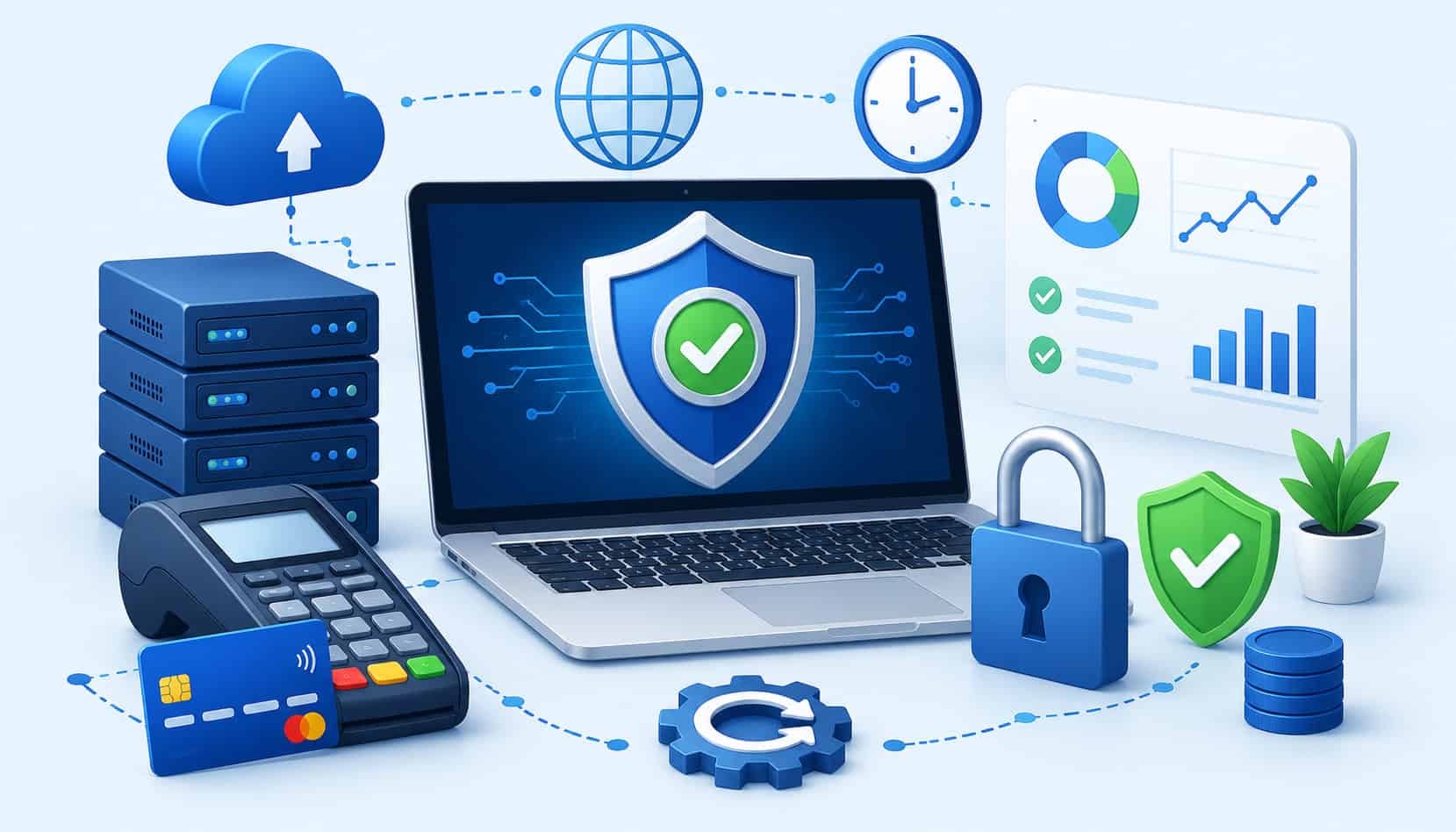
Payment gateway downtime can turn a normal sales day into a costly operational problem. When customers are ready to pay but the transaction cannot be authorized, the issue is not only technical. It affects revenue, trust, support workload, inventory accuracy, subscription billing, and the confidence customers have in the checkout experience.
Payment gateway downtime prevention is the practice of designing, monitoring, testing, and operating payment systems so they remain available when customers need them. It includes technical safeguards such as redundancy, load balancing, database replication, payment API uptime controls, and failover systems.
It also includes operational planning, security controls, incident response, disaster recovery payment systems, and clear communication during payment processing interruptions.
For business owners, ecommerce operators, SaaS teams, developers, fintech teams, and payment managers, the goal is not to pretend outages can never happen. The goal is to reduce the chance of downtime, limit the impact when something fails, and recover quickly without creating confusion for customers or internal teams.
A reliable payment setup is built in layers. One layer may keep servers available. Another may route transactions to backup payment systems. Another may detect fraud spikes or API abuse before they affect checkout reliability. Another may alert the right people before a small issue becomes a major outage.
This guide explains how payment gateway downtime happens, why payment gateway uptime matters, and what businesses can do to improve payment system reliability in a practical, sustainable way.
What Is Payment Gateway Downtime?
Payment gateway downtime means a payment gateway or a related payment system becomes unavailable, unstable, delayed, or unable to complete transactions correctly.
In a customer-facing checkout flow, this may appear as a declined payment, a spinning payment button, a timeout message, a failed authorization, or no confirmation after the customer submits payment details.
Downtime does not always mean the entire payment gateway is fully offline. Sometimes the gateway’s dashboard works, but the payment API fails. Sometimes card authorization works, but webhook delivery does not.
Sometimes the checkout page loads, but payment latency is so high that customers abandon the cart before the transaction completes. These partial failures can be just as damaging as a full outage because they are harder to detect and explain.
Payment gateway downtime may happen during authorization requests, tokenization, fraud checks, settlement-related steps, subscription renewals, refunds, or confirmation messages.
For ecommerce payment uptime, even a short interruption at checkout can result in lost orders. For SaaS companies, downtime can interrupt signups, plan upgrades, renewals, and account access workflows tied to billing status.
Examples include:
- A payment API returning repeated timeout errors
- A server outage preventing checkout completion
- A database failure stopping payment records from being saved
- A third-party processor disruption causing authorization failures
- A DNS issue preventing payment endpoints from resolving
- A webhook failure delaying order confirmation
- A network outage between the business platform and payment provider
- A security event blocking legitimate transaction traffic
Payment gateway downtime prevention focuses on keeping these systems available, predictable, and recoverable. It also means designing payment workflows so one component failure does not immediately stop every transaction.
Why Payment Gateway Uptime Matters for Businesses
Payment gateway uptime matters because payments sit at the point where customer intent becomes revenue. A visitor may browse, compare products, add items to a cart, and reach checkout, but the sale is not complete until payment is successfully processed and confirmed.
If the gateway fails at that moment, the business may lose both the sale and the customer’s confidence. For ecommerce businesses, payment gateway downtime can cause cart abandonment. Some customers may try again later, but many will not.
If they need the product quickly, distrust the checkout experience, or worry that their card may be charged twice, they may leave and buy elsewhere. Even when the transaction eventually succeeds, uncertainty during payment can create support tickets and refund concerns.
For SaaS companies and subscription businesses, payment processing uptime affects new signups, upgrades, renewals, free-trial conversions, and dunning workflows.
Failed recurring payments can lead to unnecessary account restrictions, delayed access, customer frustration, and revenue leakage. A gateway interruption during a billing cycle can also create reconciliation work for finance and engineering teams.
For marketplaces and platforms, payment system reliability affects multiple parties at once. Buyers may not be able to pay. Sellers may not receive order confirmations. Platform operators may face disputes, support volume, and payout delays. In these environments, payment gateway reliability is closely connected to marketplace trust.
Downtime also damages internal operations. Support teams may receive duplicate tickets. Developers may need to investigate unclear logs. Finance teams may need to reconcile uncertain transactions. Managers may need to explain the issue to customers, vendors, or partners.
Payment gateway uptime is also tied to reputation. Customers may forgive a rare, well-handled issue. They are less forgiving when checkout failures happen repeatedly, when status updates are unclear, or when the business cannot explain whether a payment went through.
Strong payment gateway downtime prevention helps businesses protect:
- Revenue during peak traffic periods
- Customer confidence at checkout
- Subscription billing continuity
- Transaction success rate
- Operational efficiency
- Brand credibility
- Payment infrastructure resilience
Common Causes of Payment Gateway Downtime
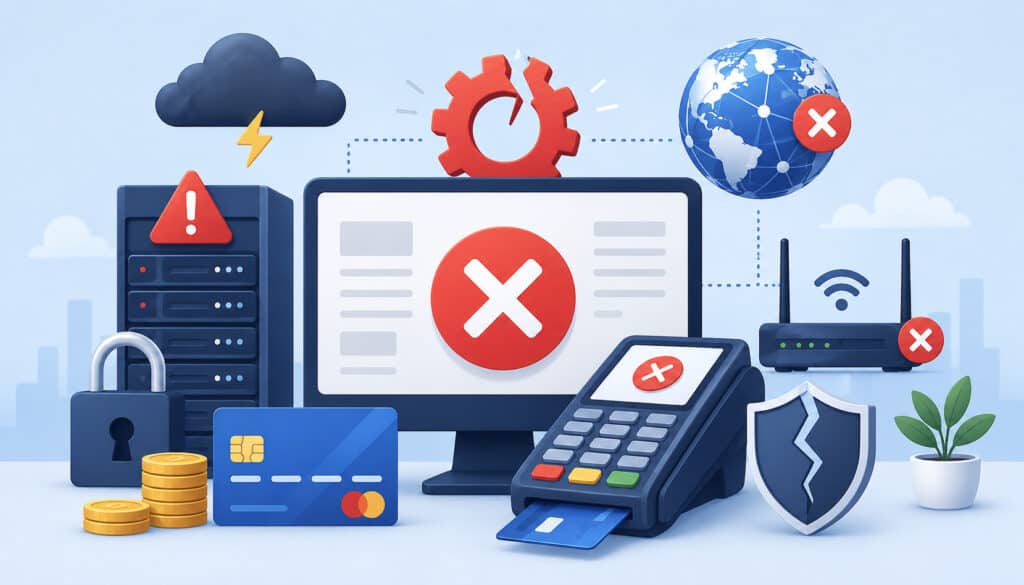
Payment gateway downtime can come from many sources because payment processing depends on several connected systems. A failure in one part of the chain can affect the entire customer experience, even if the business website remains available.
Server overload is one common cause. When transaction volume spikes during promotions, product launches, seasonal demand, or unexpected traffic surges, under-provisioned servers may slow down or stop responding. Without load balancing and scalable infrastructure, checkout pages and payment endpoints can become unstable.
API failures are another major cause. Payment APIs may return errors because of service degradation, version mismatch, authentication issues, malformed requests, expired credentials, or rate limits.
API reliability is especially important for businesses that use custom checkout flows, mobile apps, subscription platforms, or marketplace payment workflows. For a deeper look at payment API design tradeoffs, see this resource on REST and GraphQL payment API approaches.
Network outages can interrupt communication between the website, application servers, payment gateway, fraud tools, processors, and other payment infrastructure. Network redundancy helps reduce this risk by providing alternate paths for payment traffic.
Database problems can also create downtime. If a database cannot read or write payment records, orders may not be created, transaction status may not update, or duplicate payment attempts may occur. Poor database indexing, lock contention, replication lag, and storage limits can all affect payment system reliability.
Third-party processor downtime is another risk. A payment gateway may depend on acquiring banks, fraud services, token vaults, processors, or card network connectivity. If one upstream service is unavailable, authorization requests may fail unless payment routing redundancy or multi-gateway routing is available.
Other common causes include DNS failures, software bugs, deployment errors, certificate expiration, DDoS attacks, bot traffic, firewall misconfiguration, maintenance downtime, webhook delivery failures, and security incidents. Many outages are not caused by one dramatic failure. They often result from small weaknesses stacking together.
Payment gateway downtime prevention requires businesses to identify these weak points before they affect live transactions.
How Payment Gateway Infrastructure Works
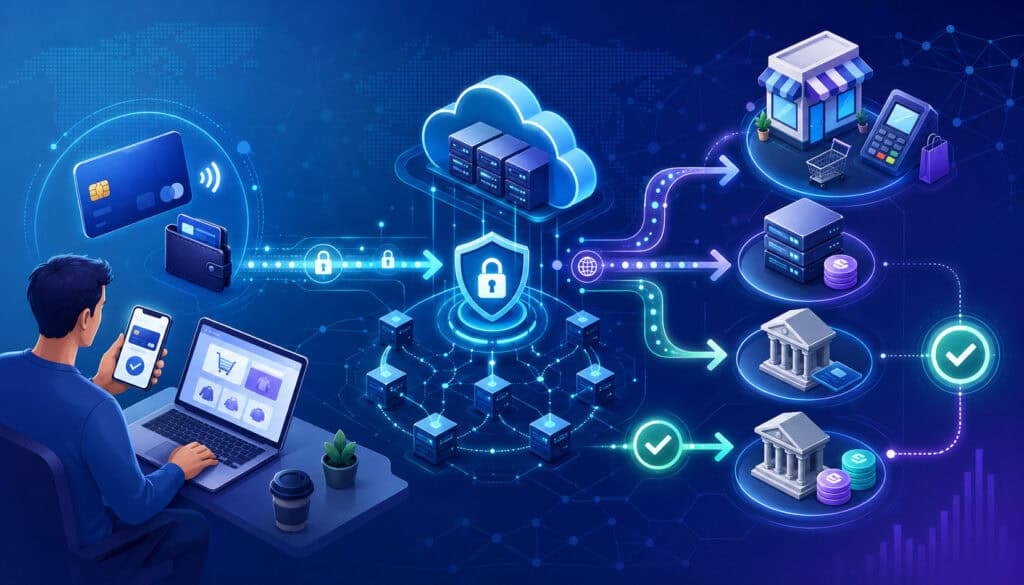
A payment gateway is not a single isolated tool. It is part of a larger payment infrastructure that connects the customer, checkout application, gateway, payment processor, fraud screening tools, issuing bank, acquiring bank, card networks, databases, notification systems, and internal business systems.
When a customer submits a payment, the checkout application sends a request to the payment gateway. That request may include payment details, tokenized card information, customer data, billing address, order amount, currency, fraud signals, and other required fields. The gateway then communicates with downstream systems to authorize the transaction.
Several steps may happen in a short period:
- The checkout page collects payment information.
- The payment API receives and validates the request.
- Security controls check authentication and request integrity.
- Fraud monitoring systems evaluate risk signals.
- The payment processor routes the authorization request.
- The issuing bank approves or declines the transaction.
- The gateway returns the result to the business application.
- The order system updates the purchase status.
- Webhooks or events notify internal systems.
- Receipts, fulfillment, subscriptions, or access workflows are triggered.
Each step depends on infrastructure. APIs need healthy servers. Servers need stable networks. Databases need available storage and replication. Webhooks need reliable delivery. Fraud systems need fast scoring. Load balancers need correct routing.
DNS records need to resolve correctly. Cloud-based payment systems need properly configured regions, zones, permissions, and security rules.
Because the payment flow has many dependencies, payment gateway reliability must be evaluated across the full transaction path. A business may have excellent website uptime but poor payment processing uptime if its checkout API, database, or webhook listener fails under pressure.
High availability payment systems are designed so no single component failure immediately breaks the full payment flow. This may involve redundant servers, distributed databases, backup payment systems, payment gateway redundancy, multi-gateway routing, and automated system failover.
For non-technical teams, the easiest way to understand payment infrastructure is to think of it as a chain. If any critical link breaks, the customer may not be able to complete payment. Payment gateway downtime prevention is the work of strengthening each link and creating backup paths when a link fails.
Payment Gateway Downtime Prevention Strategies Overview
Payment gateway downtime prevention works best when it combines architecture, monitoring, security, testing, vendor management, and operational planning. No single tool can guarantee uninterrupted payment processing. A strong strategy uses several safeguards that support each other.
Redundancy is one of the most important concepts. Redundant systems provide backup capacity when a primary component fails. This can include extra servers, multiple database replicas, backup network routes, secondary cloud regions, and additional gateway connections. Payment gateway redundancy reduces the chance that one failure will stop all transactions.
Failover systems are closely related. A failover process moves traffic from a failed or unhealthy system to a working backup. In payment systems, system failover may switch application traffic to another server, another database replica, another cloud region, or another payment gateway. The best failover systems are tested regularly, not only documented.
Load balancing helps distribute payment traffic across multiple servers or service instances. Instead of sending every checkout request to one server, a load balancer spreads requests across healthy infrastructure. This reduces overload risk and improves response time during high transaction volume.
Real-time monitoring helps teams detect problems early. Payment system monitoring should track API uptime, payment latency, error rates, transaction success rate, failed authorization patterns, webhook reliability, server uptime monitoring, and checkout completion rate. Alerts should go to teams that can act quickly.
Disaster recovery payment systems help businesses recover from larger disruptions. Disaster recovery planning includes backup environments, database replication, recovery time objectives, recovery point objectives, and clear runbooks.
Multi-gateway routing can reduce dependency on a single gateway. If one gateway becomes unavailable, transactions may be routed to another provider or backup payment path. This approach requires careful integration, token handling, reporting, reconciliation, and fraud controls.
High Availability Architecture for Payment Systems
High availability architecture is a design approach that keeps systems usable even when parts of the infrastructure fail. For payment systems, high availability means customers can continue making payments even if a server, network path, database node, region, or gateway connection becomes unhealthy.
High availability payment systems usually rely on redundancy, distribution, health checks, automation, and tested recovery procedures. Instead of depending on one server, one database, one gateway, or one data center, the system has multiple components ready to handle traffic. If one component fails, another can continue processing requests.
This does not mean every business needs the most complex enterprise architecture. A small online store may not need the same design as a large marketplace. However, every business that depends on online payments should understand its single points of failure. A single point of failure is any component that can stop the payment flow if it fails.
Examples include:
- One payment gateway with no backup
- One application server handling checkout
- One database with no replica
- One DNS provider
- One webhook endpoint with no retry handling
- One cloud region with no disaster recovery plan
- One person responsible for outage response
An uptime SLA can help set expectations with vendors, but it should not replace internal planning. An SLA describes service availability commitments, but customers will still judge the business based on whether checkout works. Businesses should review provider uptime history, support responsiveness, incident transparency, and technical recovery options.
High availability also requires operational discipline. Deployments should be tested. Configuration changes should be reviewed. Credentials and certificates should be tracked. Monitoring should verify real customer payment paths, not only server status.
Redundancy and Failover Systems
Redundancy means having more than one component available to perform a critical function. In payment infrastructure, redundancy may include multiple servers, replicated databases, backup network providers, secondary payment gateways, alternate fraud systems, and mirrored environments. The goal is to avoid depending on a single fragile component.
Failover systems decide what happens when the primary component fails. For example, if a primary payment API endpoint is unhealthy, traffic may be redirected to a backup endpoint. If a primary database becomes unavailable, the application may use a replica. If one gateway is timing out, transactions may move to another gateway through multi-gateway routing.
Good failover is not only about switching traffic. It also requires data consistency, duplicate-payment protection, idempotency, monitoring, and reconciliation. If failover is poorly designed, a customer may be charged twice, an order may be created without a confirmed payment, or a support team may not know which system processed the transaction.
Fault tolerance payment systems are built to continue operating despite failures. In practice, businesses should test failover during controlled exercises. A backup path that has never been tested may not work during a real outage.
Load Balancing for Payment Traffic
Load balancing distributes incoming payment-related traffic across multiple healthy servers or service instances. Instead of allowing one server to handle all checkout traffic, a load balancer spreads requests so the system can handle more volume and recover more gracefully from failures.
For payment systems, load balancing improves both speed and reliability. If one server becomes slow or unhealthy, the load balancer can stop sending traffic to it. This helps protect payment API uptime and reduces the chance that customers experience checkout failures during traffic spikes.
Load balancing is especially important for peak periods such as sales events, product drops, subscription renewal batches, or marketing campaigns. Payment traffic can rise quickly, and checkout pages often need to handle many concurrent authorization requests. Without load balancing, even a short surge can create errors, timeouts, and abandoned carts.
Load balancing should be paired with health checks. A health check verifies whether a server is responding correctly. For payment systems, basic server health may not be enough. A stronger health check may confirm that the application can connect to its database, reach required services, and process a test-safe transaction path.
Load balancing also supports rolling deployments. Teams can update one server at a time while others continue handling traffic. This reduces maintenance-related payment processing interruptions and helps maintain ecommerce payment uptime.
Multi-Gateway Payment Routing Strategy
Multi-gateway routing is a payment architecture that allows a business to send transactions through more than one payment gateway. Instead of relying on a single gateway for every transaction, the business can route payments based on availability, performance, cost, payment method, geography, risk level, or transaction type.
For payment gateway downtime prevention, the main benefit is resilience. If one gateway experiences payment gateway downtime, the system may redirect eligible transactions to a backup gateway. This can reduce failed payments and improve service continuity during provider disruptions.
Multi-gateway routing can be simple or advanced. A basic setup may use one primary gateway and one backup payment system. If the primary gateway times out or returns a service error, the application retries through the backup.
A more advanced setup may use smart routing rules that monitor gateway health, response times, authorization success rates, and error patterns in real time.
Payment routing redundancy requires careful planning. Different gateways may use different APIs, response codes, token formats, fraud tools, reporting structures, settlement timing, and refund processes. Teams must decide how to store transaction records consistently and how to reconcile payments across providers.
Retry logic must also be designed carefully. Retrying every failed payment through another gateway can create duplicate charges or increase fraud risk. Businesses should use idempotency keys, transaction state controls, and clear rules for which errors are safe to retry.
Multi-gateway routing is especially useful for high-volume ecommerce businesses, SaaS platforms, marketplaces, and companies that cannot afford long payment processing interruptions. However, it adds technical and operational complexity. Teams should evaluate whether the added resilience is worth the integration and reconciliation work.
Real-Time Monitoring and Alert Systems
Real-time monitoring is essential for payment gateway downtime prevention because teams cannot fix what they cannot see.
Many payment issues begin as small warning signs: rising latency, increased timeout errors, lower transaction success rate, webhook retries, or a sudden increase in failed authorizations. Monitoring helps teams detect these signals before customers report widespread problems.
Payment system monitoring should cover technical metrics and business metrics. Technical metrics include server uptime monitoring, CPU usage, memory usage, database health, API response time, error rates, queue depth, and network availability.
Business metrics include checkout completion rate, transaction success rate, payment method failure rate, refund errors, subscription renewal failures, and charge authorization trends.
Dashboards should show the current health of the payment flow. A useful dashboard may include payment gateway uptime, API reliability, payment latency, failed transaction volume, webhook delivery success, and checkout error messages.
It should also distinguish between provider-side errors, business application errors, customer input errors, and legitimate card declines.
Alerts should be actionable. A vague alert saying “payment error increased” may not be enough. A better alert identifies the affected gateway, payment method, endpoint, error category, region, and start time. Alerts should go to the right teams through reliable communication channels.
Real-time monitoring should also include synthetic testing. Synthetic tests simulate payment-related actions at regular intervals to confirm the checkout flow is working. These tests should not create real customer charges, but they can confirm that forms load, APIs respond, and confirmation pages work.
Monitoring should be reviewed after every incident. If the team learned about an outage from customers before an alert fired, the monitoring system needs improvement.
Disaster Recovery and Business Continuity Planning
Disaster recovery is the process of restoring systems after a major disruption. Business continuity planning is broader. It focuses on keeping essential operations running during and after disruption.
For payment systems, both are important because payment outages can affect revenue, customer access, fulfillment, subscriptions, refunds, and financial reporting.
Disaster recovery payment systems usually include backup infrastructure, replicated data, documented recovery steps, and tested failover environments. A backup system that exists only on paper is not enough. Teams need to know whether the backup environment can actually process payments, update orders, deliver webhooks, and support reconciliation.
Two common disaster recovery concepts are recovery time objective and recovery point objective. Recovery time objective describes how quickly a system should be restored after disruption.
Recovery point objective describes how much data loss is acceptable. Businesses can learn more about these concepts through trusted disaster recovery planning guidance.
For payment infrastructure, recovery goals should be tied to business impact. A content page may tolerate longer downtime than checkout. A subscription billing system may tolerate delayed batch processing, but not lost payment records. A marketplace may need fast recovery because payment failures affect buyers, sellers, and support teams at the same time.
A continuity plan should answer practical questions:
- Who declares a payment incident?
- Which systems are considered critical?
- What payment flows must be restored first?
- When should failover be triggered?
- How will customers and internal teams be informed?
- How will duplicate charges be prevented?
- How will pending transactions be reconciled?
- Who reviews the incident afterward?
Payment Gateway Downtime Prevention Table
The following table summarizes practical payment gateway downtime prevention strategies and how each one reduces risk.
| Strategy | What It Does | Downtime Risk Reduced | Implementation Example |
| Redundant infrastructure | Provides backup servers, services, or regions | Single server or region failure | Run checkout services across multiple healthy instances |
| Failover systems | Moves traffic to backup systems when primary systems fail | Extended outage after component failure | Redirect payment traffic to a secondary gateway during service errors |
| Load balancing | Distributes payment traffic across servers | Server overload and slow checkout | Use health-aware load balancing for checkout APIs |
| Multi-gateway routing | Routes transactions through more than one gateway | Single gateway dependency | Retry eligible timeout errors through a backup gateway |
| Real-time monitoring | Tracks uptime, latency, errors, and transaction health | Late outage detection | Alert teams when payment API errors rise above normal levels |
| Database replication | Copies data across database nodes | Data loss or database unavailability | Maintain read replicas and tested recovery procedures |
| Caching strategies | Reduces unnecessary repeated system calls | Performance bottlenecks | Cache non-sensitive configuration and payment method metadata |
| Security controls | Blocks abuse, bots, and malicious traffic | Security-driven outages | Use rate limiting, firewall rules, and fraud monitoring systems |
| Webhook retries | Re-delivers failed event notifications | Missed order or subscription updates | Retry failed webhook events with signature verification |
| Disaster recovery planning | Defines recovery steps and backup environments | Long recovery after major outage | Maintain documented runbooks and test failover scenarios |
The table is a starting point, not a complete design. Every business should adapt these strategies based on transaction volume, payment methods, technical resources, risk tolerance, compliance scope, and customer expectations.
A small business may begin with monitoring, gateway status alerts, backup checkout options, and documented support procedures. A larger platform may need active-active infrastructure, multi-gateway routing, distributed databases, advanced fraud monitoring systems, and formal incident response processes.
The key is to avoid relying on one control. Payment infrastructure resilience improves when multiple safeguards work together. Load balancing helps with traffic spikes, but it will not solve a gateway provider outage. Multi-gateway routing helps with provider outages, but it will not fix a broken database. Monitoring helps detect issues, but it cannot replace tested recovery steps.
API Reliability and Performance Optimization
Payment APIs are central to checkout reliability. If the API is slow, unstable, poorly documented, or unable to handle errors correctly, the customer payment experience will suffer. API reliability includes availability, predictable response behavior, secure authentication, proper error handling, version control, performance tuning, and safe retry behavior.
Timeout handling is one of the most important API design areas. A payment request should not hang indefinitely. Applications should define reasonable timeout limits and clear next steps when a timeout occurs.
However, teams must avoid blindly retrying uncertain payment attempts. A timeout does not always mean the payment failed. The gateway may have processed the request, but the response may not have reached the application.
Idempotency helps prevent duplicate charges. An idempotency key allows the system to recognize repeated attempts for the same transaction and avoid processing them more than once. This is critical when customers refresh checkout pages, mobile connections drop, or applications retry after network errors.
API version control also matters. Breaking changes can cause payment processing interruptions if applications are not updated properly. Businesses should track API versions, deprecation notices, authentication changes, and endpoint behavior. Deployment pipelines should test payment integrations before changes reach production.
Caching strategies can improve performance when used carefully. Non-sensitive configuration data, payment method availability, tax-related lookup results, or static checkout settings may be cached to reduce repeated calls. Sensitive card data should not be cached casually, and teams must follow applicable card data security requirements.
API security also supports uptime. Poorly protected APIs may be abused through credential stuffing, bot traffic, excessive requests, or injection-style attacks. The API security risks documented by security experts can help teams understand common weaknesses and design safer payment APIs.
Database and Infrastructure Stability
Payment systems depend heavily on databases. Even when a payment gateway is available, a business may still experience checkout failures if its own database cannot save orders, update payment status, record transaction IDs, or synchronize subscription changes. Database stability is a major part of payment system reliability.
Database replication helps reduce risk by copying data to another database node or region. If the primary database fails, a replica may support recovery or failover. However, replication must be monitored carefully. Replication lag can cause stale data, inconsistent order status, or confusion during reconciliation.
Backups are also essential. A backup protects against data corruption, accidental deletion, failed migrations, and certain infrastructure failures. But backups are only useful if they can be restored. Teams should test restoration procedures and confirm that recovered data supports payment reconciliation.
Scaling is another key issue. As transaction volume grows, infrastructure must handle more checkout requests, payment confirmations, webhook events, reporting queries, and fraud checks.
Horizontal scaling adds more service instances to handle traffic. Vertical scaling increases the resources available to a server or database. Many payment systems use both approaches.
Cloud-based payment systems can improve flexibility, but only when configured correctly. Misconfigured permissions, poorly designed networks, limited regional planning, and weak monitoring can still create downtime. Cloud infrastructure should be designed for resilience, security, and operational visibility.
Caching strategies can reduce database load, but they should be used carefully in payment workflows. Caching order status or payment state incorrectly can create customer confusion. Cache non-sensitive, low-risk data where possible, and keep real payment status tied to reliable source-of-truth records.
Infrastructure stability also depends on deployment practices. Payment-related releases should include testing, rollback plans, monitoring, and change approvals. A small configuration error can create widespread payment processing interruptions.
Security and Its Role in Downtime Prevention
Security is often discussed in terms of data protection, but it also plays a major role in uptime. A payment system can become unavailable because of malicious traffic, fraud spikes, API abuse, credential attacks, malware, misconfigured firewalls, or emergency shutdowns after suspicious activity.
DDoS attacks are a direct threat to payment gateway uptime. A DDoS attack overwhelms systems with traffic, making them slow or unavailable for legitimate customers. Rate limiting, traffic filtering, network redundancy, web application firewalls, and DDoS protection services can help reduce this risk.
Fraud spikes can also affect availability. If fraud monitoring systems are not tuned properly, a sudden wave of bot-driven payment attempts may overload checkout pages, payment APIs, fraud tools, and support teams.
Fraud monitoring systems should identify abnormal transaction patterns, repeated failed authorizations, suspicious card testing, and unusual checkout behavior.
API abuse is another risk. Attackers may try to exploit weak authentication, excessive data exposure, broken authorization, or missing rate limits.
Secure API design supports both payment protection and payment infrastructure resilience. Businesses should review authentication, authorization, logging, input validation, and request throttling.
PCI compliance is also relevant because businesses that store, process, or transmit card data must protect payment account data. The official card data security requirements provide a baseline for technical and operational controls related to payment data protection.
Compliance alone does not guarantee uptime, but strong security controls reduce the chance that a security issue will trigger downtime.
Security monitoring and incident response should be connected to payment operations. If a firewall blocks legitimate checkout traffic, if fraud rules are too aggressive, or if an authentication service fails, teams need a way to detect and correct the issue quickly.
Payment Gateway Monitoring Metrics to Track
Payment gateway downtime prevention depends on tracking the right metrics. Server status alone is not enough. A payment system can appear technically available while customers still cannot complete transactions. The best monitoring strategy combines infrastructure, API, transaction, customer experience, and business metrics.
Payment gateway uptime is the percentage of time the payment gateway or payment flow is available. This is useful, but it should be measured carefully. A gateway status page may show availability, while your integration may fail because of a local configuration issue or API error.
Transaction success rate is one of the most important business metrics. It shows how many payment attempts are completed successfully. A sudden drop may indicate gateway issues, fraud rule problems, issuer declines, checkout bugs, network trouble, or customer experience friction.
API latency measures how long payment API requests take. High payment latency can cause timeouts and customer abandonment. Even if transactions eventually succeed, slow responses can make checkout feel broken.
Error rate tracks failed requests. Teams should separate errors by category, such as timeout, authentication failure, validation error, provider error, rate limit, server error, and network error. This helps identify whether the problem is internal, external, or customer-related.
Other useful metrics include:
- Failed authorization rate
- Checkout completion rate
- Webhook delivery success
- Payment method availability
- Refund processing errors
- Subscription renewal failure rate
- Queue backlog
- Database response time
- Server uptime monitoring results
- Fraud review rate
- Retry volume
- Chargeback-related signals
Metrics should be reviewed in context. For example, a higher failed authorization rate may be normal during a fraud attack, but abnormal during routine traffic. A small increase in latency may be acceptable on low-risk pages but harmful during checkout.
Monitoring should also support incident response. Dashboards should help teams answer: What is failing? When did it start? Who is affected? Is revenue impacted? Is failover needed? Has the issue stabilized?
Webhook Reliability and Event Delivery
Webhooks are automated messages sent from one system to another when an event occurs. In payment systems, webhooks often notify business applications about successful payments, failed payments, refunds, disputes, subscription renewals, chargebacks, and other transaction events.
Webhook reliability is critical because many business workflows depend on these events. A payment may be approved, but if the webhook fails, the order may not be marked paid.
A subscription may renew, but access may not update. A refund may be issued, but internal records may remain incorrect. These are not always visible as payment gateway downtime, but they can still disrupt operations.
Reliable webhook systems use acknowledgments. When a business application receives a webhook, it should respond with a success status only after the event is safely received and recorded. If the receiving system is unavailable, the sender should retry delivery.
Retries should use a controlled schedule. Immediate repeated retries can overload a struggling system. Gradual retries with backoff are safer. Teams should also maintain a way to replay events if a webhook listener was down for a period.
Signature verification is important for security. Webhook receivers should verify that events came from the expected source and were not modified. This helps prevent fraudulent or spoofed event messages.
Event consistency also matters. Webhooks may arrive out of order or more than once. Applications should be designed to handle duplicate events safely. Idempotent event processing ensures the same event does not create duplicate orders, duplicate emails, or incorrect account changes.
Load Testing and Stress Testing Payment Systems
Load testing helps businesses understand how payment systems perform under expected traffic. Stress testing pushes systems beyond normal limits to identify weak points before real customers are affected. Both are important for payment gateway downtime prevention.
A load test might simulate normal checkout volume, a promotional traffic spike, subscription renewal batches, or a high number of simultaneous payment attempts. The goal is to confirm that checkout pages, APIs, databases, fraud tools, queues, and webhook listeners remain stable.
Stress testing goes further. It may simulate sudden traffic surges, gateway delays, database slowdowns, network failures, or third-party service errors. The goal is not to make the system look perfect. The goal is to discover how it fails and whether it fails safely.
Payment testing should avoid creating real charges unless a controlled test environment and approved process are in place. Teams should use test cards, sandbox environments, staging systems, and safe transaction simulations whenever possible.
Load testing should evaluate:
- Checkout page response time
- Payment API uptime under pressure
- Payment latency during high traffic
- Database performance
- Error rates
- Queue processing
- Webhook delivery
- Fraud system behavior
- Retry logic
- Failover performance
- Server resource usage
Testing should also include operational readiness. Do alerts trigger? Do dashboards show the issue? Can teams identify the bottleneck? Does the incident response plan work? Can failover be activated safely?
Businesses should test before major campaigns, product launches, platform migrations, and payment integration changes. Testing after an outage is also valuable because it confirms whether fixes actually improved reliability.
Payment Gateway Downtime Prevention Checklist
A practical checklist helps teams turn reliability concepts into action. Payment gateway downtime prevention should be reviewed regularly, especially before major traffic events, payment integration changes, new product launches, and subscription billing cycles.
Use this checklist as a starting point:
- Redundant systems enabled for critical payment components
- Failover configured and tested
- Load balancing enabled for payment traffic
- Real-time monitoring active
- Alerts configured for payment errors, latency, and transaction failures
- Multi-gateway setup considered for critical payment flows
- Payment routing redundancy documented
- API retry logic implemented safely
- Idempotency keys used for payment attempts
- Disaster recovery plan in place
- Recovery time and recovery point goals defined
- Security protections active
- Fraud monitoring systems tuned
- Rate limiting configured
- Database backups configured
- Database replication monitored
- Webhook reliability tested
- Webhook signature verification enabled
- Server uptime monitoring configured
- DNS and certificate expiration tracked
- Load testing completed before major traffic events
- Incident response roles assigned
- Customer support scripts prepared
- Reconciliation process documented
- Provider uptime SLA reviewed
- Post-incident review process defined
This checklist should be owned by multiple teams, not only engineering. Payment reliability involves finance, operations, customer support, security, product, and leadership. Each team needs to know its role before a payment outage occurs.
For example, support teams should know what to tell customers if transactions are pending. Finance teams should know how to reconcile uncertain payments. Developers should know how to check logs and trigger safe failover. Managers should know when to escalate to payment providers.
Common Mistakes That Cause Payment Gateway Downtime
Many payment outages happen because of avoidable mistakes. Some are technical, such as missing retries or weak database design. Others are operational, such as unclear ownership or poor incident communication. Payment gateway downtime prevention requires both technical maturity and process discipline.
A common mistake is relying on a single payment gateway without a backup plan. A single gateway may be enough for low-risk businesses, but as payment volume grows, so does the impact of provider downtime. Businesses that cannot tolerate long interruptions should evaluate backup payment systems or multi-gateway routing.
Another mistake is assuming website uptime equals payment uptime. A store may load normally while payment authorization fails. Teams need monitoring that follows the full checkout path, not only homepage availability.
Poor scaling is also common. Businesses may prepare for website traffic but forget that payment APIs, fraud tools, databases, and webhook systems also need capacity. Checkout reliability depends on the slowest critical component.
Ignoring logs is another issue. Error logs often show warning signs before a full outage. Repeated timeouts, authentication warnings, webhook failures, and database slow queries should be investigated early.
Lack of testing creates risk. Systems that work during normal traffic may fail during peak transaction volume. Systems that fail over in theory may not fail over correctly in practice.
Finally, businesses sometimes lack clear incident response. When no one knows who owns the payment issue, teams lose valuable time. Structured incident response guidance can help organizations think through preparation, detection, response, and recovery.
Technical Mistakes
Technical mistakes often begin with assumptions. A team may assume the payment gateway will always respond quickly, the database will always be available, or webhooks will always arrive in order. Payment systems should be designed for imperfect conditions.
Missing retry logic is a common problem. If a temporary gateway timeout causes an immediate failed order, customers may abandon checkout unnecessarily. However, retry logic must be safe. Without idempotency, retries can create duplicate charges or duplicate orders.
Poor API design can also cause downtime. Long-running requests, unclear error codes, weak authentication handling, and missing version control can all reduce API reliability. Payment APIs should fail predictably and provide enough detail for troubleshooting.
Weak database design is another risk. Slow queries, missing indexes, lock contention, and limited connection pools can affect checkout during high volume. Payment records should be stored consistently, and transaction state changes should be carefully controlled.
A lack of redundancy creates fragile systems. One server, one database, one region, or one gateway connection can become the failure point that stops revenue.
Operational Mistakes
Operational mistakes can turn a small technical issue into a larger business disruption. One common issue is unclear ownership. If engineering thinks the payment provider owns the problem, support thinks engineering owns it, and finance waits for updates, customers may receive inconsistent answers.
Poor communication planning is another problem. During a payment outage, teams need to know what to say internally and externally. Customers should not be encouraged to retry repeatedly if transaction status is uncertain. Support teams should have guidance for pending payments, duplicate charge concerns, and order confirmation delays.
Insufficient staffing during high-risk periods can also create downtime impact. If a major campaign drives traffic but no one is monitoring payment systems, the business may discover problems only after many customers complain.
No disaster recovery planning is another operational weakness. Teams should know how to activate backup systems, who can approve failover, and how to confirm recovery.
Post-incident reviews are often overlooked. Without a review, the same outage pattern may happen again. A good review identifies root causes, timeline, customer impact, missed alerts, and concrete fixes.
How Businesses Can Improve Payment Reliability
Businesses can improve payment reliability by treating payments as a critical system with ongoing maintenance, monitoring, and improvement. The work does not end after a gateway is integrated. Payment infrastructure changes as traffic grows, customer behavior shifts, fraud patterns evolve, and technical dependencies change.
Start by mapping the payment flow. Identify every system involved from checkout to confirmation. Include the website, application server, payment gateway, processor, database, fraud tools, email service, webhook listener, subscription platform, and order management system. This map helps reveal single points of failure.
Next, improve monitoring. Track transaction success rate, payment latency, API errors, webhook delivery, checkout completion, and provider status. Create alerts that identify meaningful changes, not just generic server problems.
Review API behavior. Make sure timeout handling, retry logic, idempotency, authentication, and versioning are implemented correctly. Developers should understand which errors can be retried safely and which require customer action.
Evaluate redundancy. This may include load-balanced servers, database replication, backup network paths, secondary regions, or multi-gateway routing. The right level of redundancy depends on business risk and transaction volume.
Test regularly. Run load tests before major events. Test failover procedures. Confirm that backups restore properly. Verify that webhooks can be replayed. Review what happens when a gateway is slow, not only fully down.
Improve security. Use rate limiting, fraud monitoring systems, bot protection, firewall controls, and secure API practices. Security controls should protect uptime without blocking legitimate customers.
Finally, review transaction logs and support tickets. Customers often reveal reliability issues before dashboards do. Repeated complaints about timeouts, duplicate charges, or missing confirmations should trigger technical review.
Choosing a Reliable Payment Gateway Setup
Choosing a reliable payment gateway setup requires looking beyond transaction fees and basic feature lists. Businesses should evaluate how the gateway supports uptime, integration quality, reporting, security, scalability, and recovery.
An uptime SLA is useful, but it should be only one part of the evaluation. Businesses should also ask how the provider communicates incidents, whether status updates are timely, whether support is available during payment emergencies, and whether technical documentation explains errors clearly.
API stability is critical. A reliable gateway should provide consistent API behavior, clear versioning, meaningful error codes, idempotency support, secure authentication, and reliable testing environments. Payment API uptime depends partly on the provider and partly on how well the business integrates with that API.
Failover support is another consideration. Some businesses need backup payment systems, multi-gateway routing, or alternate payment methods. The gateway setup should support this without creating unnecessary reconciliation problems.
Monitoring tools are also important. A business should be able to see transaction status, errors, decline reasons, webhook events, refunds, disputes, and settlement-related activity. Strong reporting helps teams troubleshoot payment processing interruptions faster.
Fraud tools should be evaluated carefully. Aggressive fraud rules may reduce risk but also lower transaction success rate if poorly tuned. A reliable setup balances fraud protection with checkout reliability.
Scalability matters as the business grows. A small store may not need complex routing, but a high-volume platform should evaluate payment infrastructure resilience, payment routing redundancy, and performance under peak volume.
For checkout authentication planning, this guide on secure checkout authentication flows may be useful. Businesses exploring alternate payment experiences can also review bank-based checkout methods as part of a broader payment continuity strategy.
Payment Gateway Downtime Prevention Best Practices
Long-term payment gateway downtime prevention requires continuous improvement. Businesses should build reliability into architecture, development, vendor management, security, and operations.
First, design for failure. Assume that APIs may time out, databases may slow down, webhooks may arrive late, networks may fail, and providers may experience service interruptions. Systems that expect failure are better prepared to recover from it.
Second, reduce single points of failure. Use redundancy where it matters most. This may include multiple servers, database replication, network redundancy, payment gateway redundancy, and backup payment systems. Not every component needs the same level of redundancy, but critical payment paths deserve special attention.
Third, monitor the full customer payment journey. Track whether customers can complete checkout, not only whether servers are online. Include payment latency, transaction success rate, checkout reliability, webhook reliability, and failed authorization patterns.
Fourth, document incident response. Define roles, escalation paths, communication templates, provider contacts, failover criteria, and reconciliation steps. Incident response should be practiced and improved over time.
Fifth, test systems under pressure. Load testing and stress testing reveal weak points before customers encounter them. Testing should include traffic spikes, slow APIs, database stress, webhook failures, and failover scenarios.
Sixth, protect payment systems from abuse. Use rate limiting, fraud monitoring systems, bot controls, secure API design, and card data security controls. Security and uptime are connected.
Seventh, review providers regularly. Compare uptime SLA terms, support quality, API reliability, documentation, incident transparency, and integration flexibility. A payment provider that worked for an early-stage business may not fit later operational needs.
Finally, learn from every issue. Review alerts, logs, timelines, support tickets, customer impact, and recovery actions. Payment system reliability improves when teams convert incidents into better architecture and better processes.
Final Thoughts on Payment Gateway Downtime Prevention Strategies
Payment gateway downtime prevention is not a single feature or one-time setup. It is a layered approach to keeping payments available, reliable, secure, and recoverable.
The most resilient businesses combine high availability architecture, failover systems, load balancing, real-time monitoring, disaster recovery planning, payment gateway redundancy, and multi-gateway routing where appropriate.
Downtime prevention starts with understanding the full payment path. A transaction depends on checkout code, APIs, servers, databases, networks, fraud tools, gateways, processors, banks, webhooks, and internal workflows. When teams understand those dependencies, they can identify weak points before customers are affected.
The practical goal is to improve payment processing uptime while reducing confusion during incidents. Businesses should know when something is failing, what customers are experiencing, who owns the response, how to switch to backup systems, and how to reconcile transactions after recovery.
There is no realistic way to eliminate every possible outage. Networks fail, software changes introduce bugs, providers experience disruptions, and security threats evolve. However, businesses can greatly reduce the impact of payment gateway downtime by planning for failure before it happens.
Payment infrastructure resilience is a competitive advantage because customers expect checkout to work whenever they are ready to buy. A reliable payment experience protects revenue, strengthens trust, and gives internal teams the confidence to operate through unexpected disruptions.
What is payment gateway downtime?
Payment gateway downtime occurs when a payment gateway or related payment system becomes unavailable, unstable, or unable to complete payment transactions. Customers may see checkout errors, authorization failures, timeouts, missing confirmations, or delayed payment status updates.
Downtime can be full or partial. A full outage may stop all transactions. A partial outage may affect only one payment method, one API endpoint, one region, one webhook system, or one transaction type. Partial outages can be harder to detect because some payments may continue working while others fail.
What causes payment gateway downtime?
Common causes include server overload, API failures, network outages, database issues, third-party processor disruptions, DNS failures, software bugs, configuration errors, expired certificates, security incidents, DDoS attacks, fraud spikes, and maintenance problems.
Many outages involve multiple factors. For example, a traffic spike may overload checkout servers, which increases API latency, which causes retries, which adds more load to the database. Payment gateway downtime prevention works best when businesses reduce weak points across the full payment flow.
How can businesses prevent payment gateway downtime?
Businesses can prevent payment gateway downtime by using redundancy, failover systems, load balancing, payment system monitoring, multi-gateway routing, database replication, security controls, webhook reliability practices, and disaster recovery planning.
They should also test payment systems regularly, monitor transaction success rate, review error logs, define incident response roles, and prepare backup payment systems where needed. Prevention is not only technical. It also requires clear operations, vendor management, and customer communication plans.
What is payment gateway uptime?
Payment gateway uptime refers to the amount of time a payment gateway or payment flow is available and working correctly. High payment gateway uptime means customers can reliably complete payments with minimal errors, delays, or interruptions.
Businesses should measure uptime from the customer’s checkout experience, not only from server status. If the website is available but payments fail, the payment experience is not truly available.
What is a failover system in payments?
A failover system automatically or manually switches payment traffic from a failed system to a working backup. In payments, failover may involve switching to another server, database replica, cloud region, API endpoint, or payment gateway.
Failover helps maintain service continuity when the primary system becomes unhealthy. It must be tested carefully because payment failover involves transaction state, duplicate-charge prevention, reconciliation, and customer communication.
What is multi-gateway routing?
Multi-gateway routing allows a business to process payments through more than one gateway. Transactions may be routed based on availability, performance, payment method, transaction type, risk level, or fallback rules.
This strategy can reduce dependency on one provider and improve payment routing redundancy. However, it requires thoughtful integration, reporting, token handling, fraud controls, and reconciliation.
How does load balancing improve payment reliability?
Load balancing distributes payment traffic across multiple servers or service instances. This helps prevent overload, improves response time, and allows unhealthy servers to be removed from traffic rotation.
For checkout reliability, load balancing is useful during traffic spikes, campaigns, subscription billing runs, and high-volume shopping periods. It should be paired with health checks and real-time monitoring.
What is disaster recovery in payment systems?
Disaster recovery in payment systems is the process of restoring payment operations after a major disruption. It may include backup infrastructure, database replication, alternate environments, recovery procedures, and failover plans.
A strong disaster recovery plan defines recovery goals, critical systems, responsible teams, communication steps, and reconciliation procedures. Businesses should test recovery plans before an actual outage occurs.
How do monitoring tools help prevent downtime?
Monitoring tools help teams detect problems early by tracking payment API uptime, payment latency, transaction success rate, error rates, webhook delivery, server health, database performance, and checkout completion.
Good monitoring reduces the time between issue detection and response. It also helps teams understand whether a problem comes from internal infrastructure, a payment gateway, a processor, customer behavior, or security activity.
Conclusion
Payment gateway downtime prevention is essential for businesses that depend on online payments, subscription billing, digital checkout, marketplaces, or platform-based transactions. When payment systems fail, the impact can reach far beyond a missed sale.
It can affect customer trust, support volume, finance workflows, fulfillment, account access, and long-term reputation.
Reliable payment systems are built with layers. Redundancy reduces single points of failure. Failover systems keep traffic moving when primary systems fail. Load balancing improves stability under high traffic.
Multi-gateway routing reduces dependency on one provider. Real-time monitoring helps teams detect issues early. Disaster recovery planning prepares the business for larger disruptions. Security controls protect both data and availability.
The most practical approach is continuous improvement. Map the payment flow, monitor the right metrics, test under pressure, document incident response, review vendor reliability, and learn from every issue.
Businesses do not need to solve every reliability challenge at once, but they should steadily strengthen the systems that protect revenue and customer confidence.
Prioritizing payment infrastructure resilience helps create a checkout experience customers can trust. With the right planning, monitoring, testing, and recovery processes, businesses can reduce payment processing interruptions and build payment systems that remain dependable when they matter most.