API authentication methods for payments are the security controls that help payment systems decide whether an application, website, server, or connected service should be allowed to communicate with a payment API.
For businesses that accept online payments, manage recurring billing, support digital wallets, or connect payment data to internal systems, authentication is not just a developer detail. It is a core part of secure payment processing.
A payment API can do powerful things. It may create transactions, tokenize card details, issue refunds, pull settlement reports, update subscriptions, or send payment event notifications. Because these actions affect money, customer data, and business records, the API must know who is calling it before it accepts the request.
That is where payment API authentication comes in. It verifies the identity of the software making the request. Depending on the payment processing API, this may involve API keys, bearer token authentication, OAuth authentication, HMAC authentication, JWT authentication, mutual TLS, webhook signature verification, or a combination of methods.
For business owners, ecommerce teams, SaaS companies, finance teams, product managers, and developers, the goal is not to memorize every technical standard. The goal is to understand what each method does, why it matters, and what choices affect payment API security.
Strong authentication helps protect checkout flows, customer records, card payment API requests, recurring billing API actions, reports, refunds, and internal financial workflows.
This guide explains API authentication methods for payments in a practical way so teams can ask better questions, review integrations more confidently, and reduce avoidable security risks.
What Is API Authentication in Payments?
API authentication in payments is the process of proving that a system attempting to connect to a payment API is trusted. The system may be an ecommerce website, mobile backend, SaaS platform, marketplace, accounting tool, billing system, or internal application server.
When a checkout page sends a request to create a payment, the payment gateway API needs to know that the request came from an approved system. When a recurring billing API updates a subscription, the API needs to verify that the caller is allowed to perform that action.
When a reporting tool requests transaction history, the payment processing API must confirm that the request is associated with the correct account and credentials.
Authentication is often handled with API credentials. These may include API keys, secret keys, API tokens, access tokens, public keys, private keys, certificates, or signed request headers. The exact method depends on the provider’s developer documentation and the type of API payment integration being used.
It is important to separate payment API authentication from customer payment authorization. API authentication answers, “Is this application allowed to connect to the payment API?” Customer payment authorization answers, “Is this customer payment approved?”
A card payment may be declined even when the API request is properly authenticated. Likewise, an unauthenticated API request should be rejected before any payment action is attempted.
A simple example helps. A business website sends a server-side request to charge an order. The payment API checks the secret key, validates the request, and confirms that the website’s server is trusted.
That is authentication. The payment network then evaluates whether the customer’s payment method can be approved. That is payment authorization.
Why Payment API Authentication Matters
Payment API authentication matters because payment APIs are connected to sensitive actions. A poorly protected API credential could allow an attacker, rogue vendor, or misconfigured system to attempt unauthorized transactions, access customer data, issue refunds, or abuse payment workflows.
Strong authentication supports payment API security by making sure only approved systems can connect. It also supports access control, transaction integrity, fraud prevention, secure checkout, and account protection. When authentication is weak, even a well-designed payment gateway API can become exposed through poor implementation.
Common risks include:
- Secret keys accidentally exposed in browser code
- API credentials committed to public code repositories
- Webhooks accepted without signature verification
- Old vendor credentials left active
- Test credentials confused with production credentials
- Tokens stored in logs or shared documents
- Overly broad permissions granted to tools that only need limited access
Authentication also affects data privacy. A payment API may expose transaction details, customer identifiers, tokenized payment references, subscription records, dispute information, or settlement data. If the wrong system can access those endpoints, the business may face operational, financial, and compliance problems.
Secure payment API authentication also helps preserve trust. Customers may never see API credentials, HMAC signatures, access tokens, or mTLS authentication certificates. But they do notice when checkout fails, duplicate charges occur, refunds are mishandled, or account data is compromised. Good authentication reduces the chances of those problems.
For teams building or reviewing an API payment integration, authentication should be part of the risk conversation from the beginning. It belongs alongside encryption, tokenization, PCI compliance planning, fraud prevention controls, monitoring, and incident response.
Authentication vs Authorization in Payment APIs
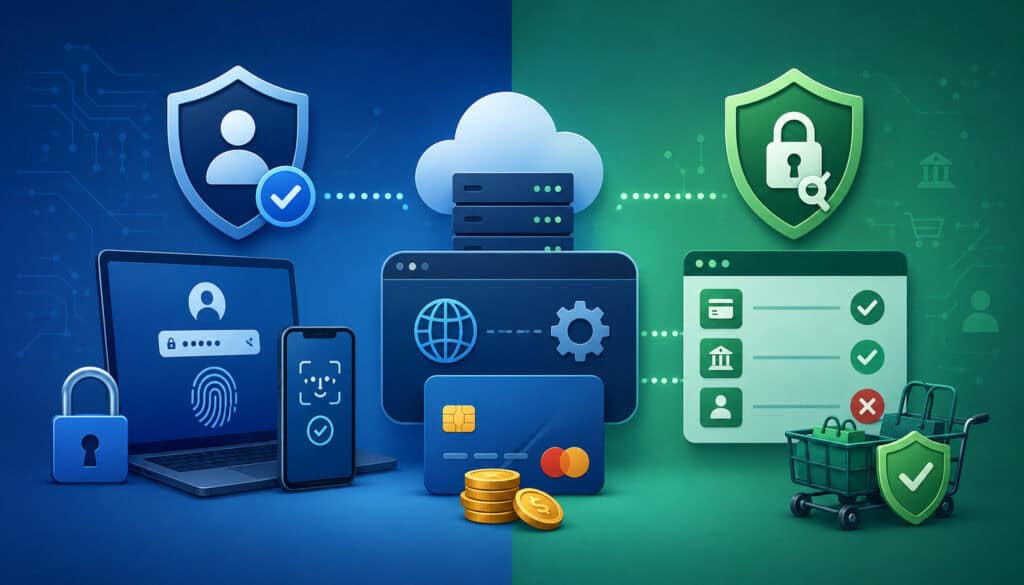
Authentication and authorization are related, but they are not the same thing. Understanding the difference helps teams design safer payment integrations.
Authentication verifies identity. It confirms that the application, server, user, or service making the API request is known and trusted. For example, a payment API may authenticate a request by validating a secret key, bearer token, signed JWT, HMAC signature, or client certificate.
Authorization determines what the authenticated identity is allowed to do. Once the API knows who is calling, it still needs to decide whether that caller has permission to create a transaction, issue a refund, read reports, update a customer record, manage payment tokens, or access settlement data.
A practical payment example looks like this:
- An ecommerce backend authenticates with a secret key.
- The payment API recognizes the backend as a valid application.
- The API then checks whether that key has permission to create payments.
- If the key does not have refund permissions, a refund request should be denied.
This separation is important because not every system needs full access. A checkout service may need permission to create payments and tokenize cards, but not access settlement reports.
A finance reporting tool may need read-only access to transaction data, but not permission to create charges. A vendor integration may need limited access for a specific function, not unrestricted API control.
Authentication without authorization can be risky. If one credential can do everything, a single exposure may affect every payment workflow. Authorization without reliable authentication is also unsafe because permissions only matter after identity has been verified.
Key Participants in Payment API Authentication
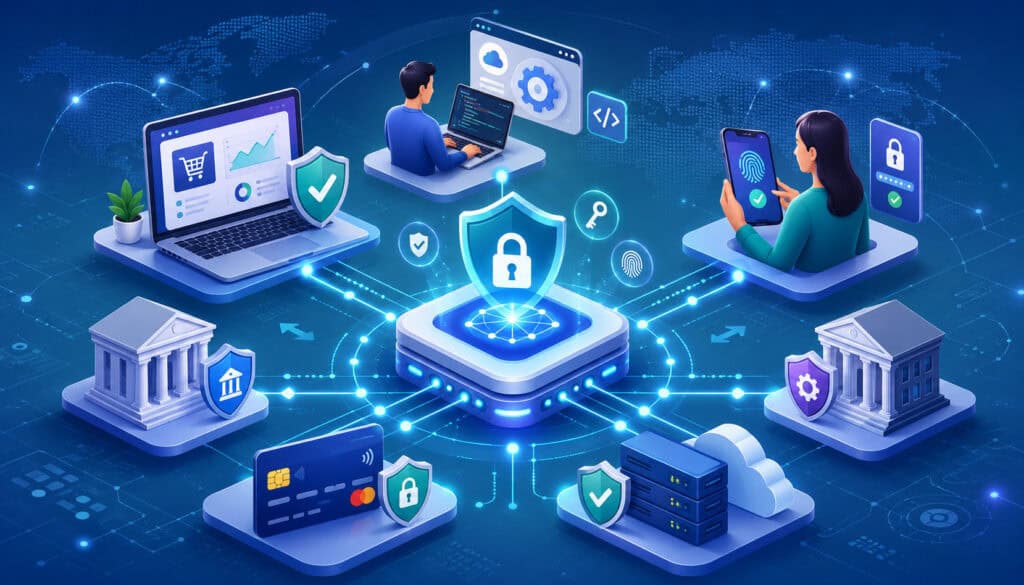
Payment API authentication involves more than a developer copying a key into an application. Several teams, systems, and controls work together to keep an online payment API secure.
The business owns the payment relationship, customer experience, and operational risk. Developers build and maintain the integration. Product managers define checkout, billing, refund, and reporting workflows.
Finance teams may need access to settlements, reconciliation, chargebacks, and transaction reports. Security or IT teams review storage, monitoring, access control, and incident response.
On the technical side, the application server usually sends sensitive API requests. A browser or mobile app may use limited public keys in some API designs, but secret keys and private credentials should remain server-side.
The payment gateway API or payment processor API validates credentials, checks permissions, enforces API security controls, and returns responses.
The provider dashboard is another important participant. It may be where teams create API credentials, rotate keys, configure webhook endpoints, review logs, set roles, restrict permissions, and switch between sandbox testing and production credentials.
The Business and Development Team
Business owners, developers, product teams, and finance teams share responsibility for payment API authentication. Developers may implement the technical controls, but business decisions often determine who receives access, which systems need credentials, what vendors are connected, and how production changes are approved.
A common mistake is treating API credentials as a purely technical asset. In reality, credentials may control access to payment creation, refunds, recurring billing, customer records, disputes, and financial reports. That makes them business-critical.
Development teams should understand where credentials are stored, how they are deployed, who can view them, and how key rotation works. Product teams should understand the security implications of checkout design, hosted flows, embedded forms, and direct API integrations. Finance teams should know which tools have reporting or refund permissions.
Strong internal ownership also matters. Each payment API integration should have a named owner or team responsible for documentation, monitoring, and periodic review. Without ownership, old credentials, forgotten webhooks, and unnecessary dashboard users can remain active long after they are needed.
The Payment Gateway, Processor, and API Platform
The payment gateway API, payment processor API, and related API platform are responsible for validating incoming requests. They typically check API credentials, confirm token validity, validate signatures, enforce TLS encryption, apply rate limiting, log activity, and reject suspicious or malformed requests.
Different APIs use different authentication patterns. A payment gateway API may use API key authentication for direct server-side calls. A marketplace or partner platform may use OAuth authentication with scoped access.
A high-security financial data exchange may require mutual TLS. Webhook events may use webhook signature verification to prove that event notifications came from the expected source.
The API platform may also support sandbox testing, production credentials, role-based access, audit trails, alerting, and restricted keys. These tools help businesses reduce risk, but they must be configured properly.
Good developer documentation is essential. It should explain how credentials work, where secret keys should be stored, how access tokens expire, how refresh tokens are handled, how webhook signatures are verified, and how to move safely from test mode to production.
For additional context on payment API architecture choices, teams can review this guide on REST and GraphQL payment API design.
Common API Authentication Methods for Payments
The most common API authentication methods for payments include API keys, bearer tokens, OAuth authentication, JWT authentication, HMAC authentication, mutual TLS, client credentials flow, and webhook signature verification. Some payment APIs use one method. Others combine methods depending on the risk level and endpoint.
API key authentication is common because it is simple. The application includes an API key or secret key with the request, and the API validates it. Bearer token authentication uses API tokens, often access tokens, that are presented in request headers.
OAuth 2.0 payments commonly use access tokens, refresh tokens, scopes, and consent to support delegated access.
JWT authentication uses signed tokens containing claims such as issuer, audience, subject, and expiration. HMAC authentication uses a shared secret to create a request signature, helping verify message integrity.
Mutual TLS, also called mTLS authentication, requires both the client and server to verify certificates. Webhook authentication protects event notifications by requiring signature verification before the receiving system trusts the event.
The best method depends on the integration. A simple server-side checkout may use secret keys with HTTPS and strict storage controls. A marketplace may need OAuth authentication so connected accounts can grant limited access.
A high-risk payment processing API may require HMAC signatures or mTLS authentication for stronger request validation. A subscription platform should pay close attention to webhook signature verification because recurring billing events often arrive through webhooks.
No method should be viewed in isolation. Secure payment API authentication works best when combined with encryption, tokenization, access control, monitoring, sandbox testing, rate limiting, and payment API security best practices.
API Key Authentication
API key authentication is one of the most familiar forms of payment API authentication. The API issues one or more keys to identify the application making requests. The application includes the key in a request header, request body, or authorization field, depending on the API documentation.
A payment API may provide separate test keys and live keys. Test keys are used for sandbox testing and simulated transactions. Live keys are used for production payment activity. Mixing these environments can cause failed transactions, inaccurate testing, or accidental production activity.
API key authentication is popular because it is straightforward to implement. Developers can quickly authenticate server-side requests to create payments, retrieve transaction details, tokenize payment data, or manage recurring billing. However, simple does not mean low-risk. A secret key may provide broad access, so it must be protected carefully.
Secret keys should never be placed in browser JavaScript, mobile application code, public repositories, shared spreadsheets, client-side logs, or customer-visible error messages. Once a secret key is exposed, anyone who finds it may be able to impersonate the application until the key is revoked or rotated.
API key authentication works best when paired with safeguards such as environment separation, restricted permissions, key rotation, IP restrictions where available, secure storage, audit logs, and monitoring. For many businesses, API keys are practical and effective, but only when treated as sensitive credentials.
Public Keys vs Secret Keys
Many payment APIs distinguish between public keys and secret keys. A public key may be designed for limited use in a browser or mobile environment, such as initializing a secure checkout form or creating a tokenized payment reference. A secret key is used for privileged server-side API calls and must remain private.
The difference matters. A public key may identify an account or environment, but it should not allow sensitive actions by itself. A secret key may create payments, issue refunds, read customer records, or access transaction data depending on permissions. Exposing a secret key in client-side code is one of the most serious payment API authentication mistakes.
Private keys and public keys may also appear in certificate-based authentication or cryptographic signing. In those contexts, the private key must remain protected, while the public key may be shared for validation.
Teams should read the developer documentation carefully because “public” and “secret” can have specific meanings within each API design.
A good rule is simple: only use client-side credentials when the API explicitly says they are safe for that purpose. All sensitive credentials belong on the server or in an approved secrets management system.
API Key Rotation and Storage
API key rotation means replacing an existing key with a new one and retiring the old key. Rotation reduces the risk that an old, forgotten, or possibly exposed credential remains active forever.
Businesses should rotate API credentials when a developer leaves, a vendor relationship ends, a repository exposure is suspected, a system is replaced, or a regular security review requires it.
Some teams rotate keys on a schedule; others rotate based on risk events. The right approach depends on business size, transaction volume, and internal security practices.
Secure storage is just as important as rotation. Keys should be stored in environment variables, encrypted secret stores, cloud secrets management tools, or secure deployment systems. They should not be hardcoded into application files or copied into chat threads, tickets, or documents without controls.
Key rotation should be tested before production changes. A rushed rotation can break checkout, subscription renewals, refund tools, or webhook processing. A safer approach is to create a new key, deploy it, confirm successful API calls, then revoke the old key.
Bearer Token Authentication
Bearer token authentication uses a token as proof of access. The application sends the token with the API request, commonly in an authorization header. The API checks the token and decides whether the request should be accepted.
In payment APIs, bearer tokens are often access tokens. An access token may be short-lived and tied to specific permissions. Some systems also use refresh tokens, which allow the application to obtain a new access token without requiring a full reauthorization process.
Bearer tokens are convenient, but they must be handled carefully. A bearer token works like a temporary pass. Whoever holds it may be able to use it until it expires or is revoked. That means access tokens should be transmitted only over HTTPS, stored securely, kept out of logs, and limited by scope whenever possible.
Token expiration is a useful security feature. Shorter token lifetimes reduce the window of abuse if a token is exposed. However, applications must handle expiration correctly. If a checkout flow fails because an access token expired and the application cannot refresh it, customers may experience payment errors.
Bearer token authentication is common in OAuth authentication, service-to-service APIs, and modern digital payment API designs. It is especially useful when credentials need limited lifetimes, scoped permissions, and revocation controls.
OAuth Authentication for Payment APIs
OAuth authentication supports delegated access. Instead of sharing a master secret key with every connected application, OAuth allows one system to grant another system limited access through access tokens and scopes.
OAuth 2.0 payments are common in platforms, marketplaces, partner integrations, accounting connections, and apps that need to act on behalf of another account.
For example, a merchant may connect a billing app to a payment account and grant permission to read transactions or manage subscriptions. The connected app receives an access token with specific permissions rather than full account control.
OAuth usually involves an authorization server, access tokens, refresh tokens, scopes, and sometimes a consent screen. The authorization server issues tokens after validating the client and the requested permissions. The payment API then accepts requests that include valid access tokens.
OAuth can improve payment API security because access can be limited and revoked. A reporting app may receive read-only access. A checkout app may receive payment creation access. A vendor can be disconnected without changing unrelated API credentials.
However, OAuth must be implemented carefully. Redirect URLs, token storage, refresh token handling, scope design, and consent flows all matter. Developers should follow the API’s documentation closely and avoid storing tokens in insecure locations.
For a broader view of API risks, the API security risk guidance provides useful educational context.
Client Credentials Flow
The client credentials flow is an OAuth flow often used for server-to-server communication. It is useful when an application needs access to payment services as itself, rather than on behalf of an individual user.
For example, a backend billing system may need to call a recurring billing API every night to update subscription statuses. There may be no customer or employee actively signing in at that moment. The application authenticates using its own client credentials and receives an access token for approved API calls.
This flow works well for backend services, internal tools, scheduled jobs, and automated financial workflows. It should not be used from browser code or mobile apps where credentials can be extracted. The client secret must remain on the server.
The client credentials flow should still use limited permissions. A reconciliation service may only need read access. A subscription service may need billing management access. A refund service may need refund permissions but not checkout configuration permissions.
Scopes and Limited Permissions
Scopes define what an access token can do. They are one of the most useful features of OAuth authentication because they support least-privilege access.
In a payment API, scopes might control permissions such as creating payments, reading transactions, issuing refunds, managing customers, updating payment methods, viewing reports, or accessing settlement data.
A token with only reporting scope should not be able to create a payment. A token for checkout should not automatically have access to all finance reports.
Scopes reduce risk when credentials are exposed or misused. If a token has limited permissions and a short expiration, the damage may be more contained than with a broad secret key.
Product and finance teams should participate in scope decisions. Developers may know how the integration works, but business teams understand which actions should be allowed. The safest design grants only the access required for the workflow.
JWT Authentication
JWT authentication uses JSON Web Tokens to carry signed claims between systems. A JWT may include information such as the issuer, audience, subject, expiration time, and permissions. The receiving system validates the token signature and checks the claims before accepting the request.
JWT authentication can appear in payment-related systems in several ways. It may be used for user sessions in a payment dashboard, internal service authentication, partner API access, or short-lived tokens in a secure payment workflow.
Some APIs use JWTs to prove that a request came from a trusted application or to exchange identity information between systems.
A signed JWT helps prevent tampering. If someone changes the token payload, the signature validation should fail. However, JWTs are not automatically encrypted.
A signed token proves integrity, but its contents may still be readable unless encryption is used separately. Sensitive payment data should not be placed inside a JWT unless the API design specifically protects it.
Expiration is important. Long-lived JWTs increase risk if exposed. Short-lived JWTs reduce that risk but require applications to handle renewal or reauthentication properly. The receiving API should validate issuer, audience, signature, expiration, and any relevant claims.
JWT authentication can be powerful, but it should be implemented with care. Poor token validation, weak signing keys, missing expiration checks, or accepting tokens from the wrong issuer can undermine security.
HMAC Signature Authentication
HMAC authentication uses a shared secret to sign API requests. The client creates a signature from request details such as the HTTP method, path, timestamp, and body.
The API independently calculates the expected signature using the same secret. If the signatures match, the API gains confidence that the request came from a trusted party and was not altered in transit.
HMAC authentication is useful for payment APIs because it supports message integrity. It can help verify that the amount, transaction ID, payload, or endpoint was not changed after signing. This is especially valuable for sensitive actions such as payments, refunds, token creation, or account updates.
Timestamps are commonly included to reduce replay risk. A replay attack occurs when a valid request is captured and resent later. If the API rejects signatures outside a short time window, old requests become less useful to an attacker.
HMAC authentication requires careful implementation. Both systems must build the signature from the same fields in the same order. Differences in whitespace, encoding, timestamp format, or body parsing can cause valid requests to fail. That is why developer documentation and sandbox testing are important.
HMAC does not replace HTTPS. It should be used with encrypted transport, secure secret storage, access control, monitoring, and rate limiting.
Mutual TLS Authentication
Mutual TLS, often called mTLS authentication, is a certificate-based method where both the client and server verify each other. Standard TLS helps the client verify that it is connecting to the correct server. Mutual TLS adds another layer by requiring the server to verify the client certificate as well.
In payment systems, mutual TLS may be used for higher-security server-to-server communication, financial data exchange, sensitive APIs, or partner integrations that require strong identity verification.
It is less common for simple ecommerce checkout integrations because it requires certificate management, but it can be valuable for high-risk environments.
With mTLS authentication, the business or application holds a client certificate and private key. The payment API checks that certificate during the connection process. If the certificate is missing, expired, revoked, or not trusted, the request is rejected before normal API processing continues.
The strength of mTLS depends on certificate management. Teams must protect private keys, renew certificates before expiration, revoke compromised certificates, and configure servers correctly. Poor certificate handling can cause outages or weaken security.
Mutual TLS is not a substitute for authorization. The API still needs to decide what the authenticated client is allowed to do. In many designs, mTLS is combined with API tokens, scoped permissions, request validation, and audit logging.
Webhook Authentication and Signature Verification
Webhooks are event notifications sent from a payment platform to a business endpoint. They may report successful payments, failed payments, refunds, disputes, chargebacks, subscription renewals, expired cards, settlement updates, or recurring billing changes.
Webhook authentication matters because webhooks often trigger business actions. A webhook may mark an invoice as paid, activate a subscription, release digital goods, update accounting records, or notify a customer. If a business trusts fake webhook events, attackers may be able to manipulate order status or internal records.
Webhook signature verification helps solve this problem. The payment system signs the webhook payload using a secret or private key. The receiving application recalculates or verifies the signature before trusting the event. If the signature is invalid, the webhook should be rejected.
Timestamps are also important. A valid old webhook should not necessarily be trusted forever. Timestamp checks help reduce replay attacks, where a captured webhook is resent later. Teams should also verify event IDs, handle duplicate events safely, and avoid assuming webhooks arrive in perfect order.
Webhook endpoints should use HTTPS, avoid exposing sensitive error details, and process events idempotently. Idempotent processing means the same event can arrive more than once without causing duplicate fulfillment, duplicate credits, or repeated internal actions.
API Authentication Methods for Payments Comparison Table
| Authentication Method | How It Works | Common Payment Use Case | Important Security Consideration |
| API key authentication | A key identifies the application making the request. | Server-side checkout, transaction lookup, token creation, basic payment gateway API access. | Secret keys must stay server-side and should be rotated when risk changes. |
| Bearer token authentication | A token is presented in the authorization header. | Token-based access to payment processing API endpoints. | Tokens should expire, use HTTPS, and be stored securely. |
| OAuth authentication | An authorization server issues scoped access tokens. | Marketplace, platform, partner, and third-party payment integrations. | Scopes and refresh token handling must be carefully controlled. |
| Client credentials flow | A server-side app receives an access token using client credentials. | Backend billing jobs, reporting services, service-to-service API access. | Client secrets must never be exposed in browsers or mobile apps. |
| JWT authentication | A signed token carries claims that the API validates. | Internal services, user sessions, partner access, identity exchange. | Validate signature, issuer, audience, expiration, and claims. |
| HMAC authentication | A shared secret signs request details and payloads. | Sensitive payment, refund, and account update requests. | Include timestamps and reject replayed or altered requests. |
| Mutual TLS | Client and server verify certificates during connection. | Higher-security server-to-server payment integrations. | Private keys and certificate lifecycles must be managed carefully. |
| Webhook signature verification | Incoming event payloads are signed and verified. | Payment success, refund, chargeback, settlement, and subscription events. | Verify signatures before trusting or acting on webhook data. |
Payment API Security Best Practices
Payment API security best practices start with protecting credentials. Secret keys, API tokens, access tokens, refresh tokens, private keys, and webhook secrets should be treated as sensitive assets. They should not appear in front-end code, public repositories, browser tools, logs, or shared documents.
Use HTTPS for every payment API request. Encryption in transit helps protect credentials and payment data as they move between systems. For broader security planning, teams can review data security standards for payment environments.
Separate sandbox testing from production. Test credentials should be used only for simulated transactions. Production credentials should be limited to approved systems and protected with stricter access controls.
Use scoped permissions where available. A reporting service should have read-only access. A checkout service should have only the permissions needed to create payments and manage payment tokens. A refund tool should be restricted to authorized users and workflows.
Verify webhooks before acting on them. Check signatures, timestamps, event IDs, and duplicate delivery behavior. Webhooks are a common place where businesses make dangerous assumptions.
Apply rate limiting and monitoring. Failed authentication attempts, unusual request patterns, unexpected refund activity, and sudden traffic spikes should trigger investigation. API security is not complete without visibility.
For ecommerce teams comparing integration models, this resource on API and hosted payment page integration choices can help frame the security and control trade-offs.
Secure Payment API Authentication Checklist
Before going live with an API payment integration, businesses should review authentication controls from both technical and operational angles.
Use this checklist as a practical starting point:
- Test and live credentials are separated.
- Secret keys are stored securely.
- Public repositories have been checked for exposed keys.
- API permissions and scopes have been reviewed.
- Webhook signatures are verified before processing events.
- HTTPS is enforced for API and webhook traffic.
- Logs are checked to ensure they do not store sensitive data.
- A key rotation plan has been created.
- Access is limited by role, system, and environment.
- Sandbox testing has covered successful and failed authentication.
- Production monitoring is enabled.
- Failed authentication alerts are reviewed.
- Vendor and employee access is documented.
- Old API credentials have been removed.
- An incident response plan exists for exposed credentials.
This checklist should be reviewed before launch and after major changes. Payment integrations evolve. New billing features, checkout changes, vendor tools, reporting systems, and subscription workflows can all introduce new credential risks.
PCI Compliance and Payment API Authentication
API authentication supports a broader payment security program, but it is not the same thing as PCI compliance. Compliance involves many requirements related to card data handling, access control, encryption, logging, vulnerability management, secure development, network security, and operational processes.
Payment API authentication helps by limiting who can connect to payment systems and what they can do. Strong access control, unique credentials, key rotation, logging, and monitoring can all support a more secure payment environment. However, authentication alone does not determine compliance status.
Businesses should understand where card data is handled. If payment card data touches business-controlled systems, compliance obligations may be more complex. Hosted payment pages, secure payment fields, tokenization, and other approaches may reduce exposure when implemented correctly.
Tokenization is especially useful because it replaces sensitive card data with a payment token that can be stored and reused for approved payment workflows. Encryption protects data in transit and, where applicable, at rest. Authentication controls who can connect to the API. These controls work together, but each has a different role.
Because payment compliance depends on implementation details, businesses should rely on qualified guidance when needed. Developer documentation, security teams, compliance professionals, and acquiring relationships may all play a role.
The payment security resource center offers useful educational material on protecting payment data.
Tokenization, Encryption, and Authentication
Tokenization, encryption, and authentication are often discussed together, but they solve different problems.
Authentication verifies who can connect to the API. It answers whether the application, server, service, or user is trusted. Without authentication, the API cannot reliably control access.
Encryption protects data from being read by unauthorized parties while it is transmitted or stored. HTTPS uses encryption to protect API requests in transit. Some systems also encrypt sensitive data at rest. Encryption is essential, but it does not prove that the caller is allowed to use the API.
Tokenization replaces sensitive payment data with a secure reference. For example, a card number may be exchanged for a token. The business can use the token for future approved transactions, recurring billing, or customer account updates without storing the original card data.
In a secure checkout flow, all three may work together. The customer enters payment details through a protected flow. Sensitive data is encrypted in transit. The payment system returns a token. The business server authenticates with the payment API using secure credentials to complete the transaction or store the token for future use.
A strong payment API security program does not rely on one control. Authentication, authorization, encryption, tokenization, fraud prevention, monitoring, and access reviews all support secure payment processing.
Common Payment API Authentication Mistakes
Many payment API authentication problems come from simple mistakes rather than advanced attacks. The most common mistake is exposing secret keys in front-end code. Browser JavaScript and mobile apps can be inspected, so secret credentials should not be placed there.
Another common mistake is committing API keys to public repositories. Even if the key is removed later, it may have already been copied. Once a secret key is exposed, it should be revoked and replaced.
Businesses also create risk by using the same keys for test and production, failing to verify webhooks, granting broad permissions to every integration, ignoring token expiration, and logging sensitive headers or request bodies.
Webhook mistakes deserve special attention. An endpoint that accepts unsigned payment events can be abused. A system that does not handle duplicate webhook events may update the same order or subscription more than once.
Authentication failures should also be monitored. Repeated failed attempts may indicate a misconfigured system, expired token, broken deployment, or attempted abuse. Ignoring those signals can delay detection.
Developer Mistakes
Developer mistakes often involve credential handling and validation. Hardcoding secret keys into application files may seem convenient during early development, but it creates long-term risk. Credentials should be loaded from secure configuration or secrets management systems.
Another mistake is poor error handling. An API error message should not reveal secret values, token contents, full request headers, or internal configuration details. Logs should help troubleshoot issues without exposing credentials.
Webhook signature verification is sometimes skipped during testing and never added before launch. This is risky because webhook events may trigger fulfillment, subscription activation, or accounting updates.
Developers may also fail to validate timestamps in HMAC or webhook signatures. Without timestamp validation, replayed requests may be harder to detect. Token refresh logic is another frequent problem.
If refresh tokens are stored insecurely or renewal failures are not handled well, the integration can become both risky and unreliable.
Business and Operational Mistakes
Business and operational mistakes usually involve access ownership. Too many people may have dashboard access. Old employees, vendors, contractors, or tools may remain connected after they no longer need access.
Some businesses do not document who owns payment API credentials. When a key needs to be rotated or a webhook fails, no one knows which system depends on it. This can turn a routine security task into an outage risk.
Skipping access reviews is another common issue. A business may start with one simple checkout integration and later add subscriptions, analytics tools, accounting exports, customer portals, and vendor services. Each new connection may add credentials and permissions.
Operational teams should also review failed authentication alerts. Repeated failures may indicate a broken deployment, an expired certificate, an incorrect key rotation, or suspicious activity. Payment API security is stronger when business and technical teams review these signals together.
Sandbox Testing for Payment API Authentication
Sandbox testing allows teams to test payment API authentication without processing real transactions. It is essential for confirming that credentials, permissions, webhooks, tokens, and error handling work as expected before production launch.
A good sandbox test should include successful requests and failed requests. Developers should test valid API keys, invalid keys, expired tokens, missing tokens, insufficient permissions, invalid HMAC signatures, expired timestamps, and rejected webhook signatures. These tests reveal whether the integration fails safely.
Webhook testing is especially important. Teams should simulate payment success, payment failure, refunds, disputes, subscription renewals, and settlement updates where supported. The receiving system should verify signatures, handle duplicates, and avoid trusting events before validation.
Sandbox testing should also check error messages. If authentication fails, the system should show a useful internal error without revealing credentials to customers or logs. Checkout should fail gracefully, and support teams should have enough information to investigate.
Moving from sandbox to production should be controlled. Production credentials should not be copied casually into local development machines. Teams should confirm that live keys are stored securely, live webhook endpoints are configured correctly, and production monitoring is active.
For teams working with ecommerce checkout tools, this guide on secure payment authentication during checkout may provide helpful related context.
Role-Based Access and Least Privilege
Role-based access and least privilege are central to secure payment API authentication. The idea is simple: each user, application, vendor, and system should receive only the access needed to perform its job.
A checkout service may need to create payments. It may not need to issue refunds. A finance reporting tool may need read access to transactions and settlements. It may not need to change customer payment methods. A customer support tool may need limited refund permissions, but only for certain users.
Role-based access reduces risk because one compromised credential does not automatically expose every payment action. It also improves accountability. When different systems use separate credentials, logs can show which system performed which action.
Least privilege should apply to API credentials, dashboard users, vendor accounts, webhook endpoints, and internal tools. Teams should review permissions regularly and remove unused access.
Audit logs are valuable here. They help answer questions such as: Which key created this payment? Which user issued this refund? Which system requested this report? Which integration generated repeated failed authentication attempts?
Rate Limiting, Monitoring, and Abuse Prevention
Authentication verifies identity, but payment APIs also need protections against abuse. Rate limiting, monitoring, anomaly detection, fraud rules, IP controls, audit trails, and failed authentication alerts all help protect payment systems.
Rate limiting restricts excessive requests. This can reduce the impact of credential stuffing, misconfigured scripts, replay attempts, scraping, or denial-of-service behavior. Payment APIs may apply limits by account, credential, endpoint, IP address, or time window.
Monitoring helps teams detect suspicious patterns. Examples include repeated failed authentication, sudden spikes in refund requests, unexpected access from unfamiliar systems, frequent token refresh failures, or webhook delivery anomalies.
Audit trails support investigation. If an unauthorized action occurs, logs can help determine which credential, endpoint, user, or system was involved. Logs should be useful, but they should not store sensitive credentials, full card details, or unnecessary payment data.
Fraud prevention also connects to authentication. Strong API security cannot stop every fraudulent payment attempt, but it can prevent attackers from abusing payment credentials or backend workflows.
A secure API payment integration supports broader fraud controls by ensuring that only trusted systems can submit and manage payment activity.
For software teams, the secure software development guidance is a useful reference for building security into development and release processes.
How Payment API Authentication Affects Customer Experience
Customers rarely think about payment API authentication, but they feel its effects. A well-designed authentication setup supports reliable checkout, accurate subscription billing, fast refunds, secure account updates, and fewer support issues.
If authentication is poorly implemented, checkout may fail because tokens expire unexpectedly. Refund tools may stop working after a key rotation. Webhook failures may prevent orders from being marked paid.
Subscription renewals may not update correctly. Customers experience these issues as declined payments, missing confirmations, delayed access, duplicate messages, or support frustration.
Security also affects trust. Customers expect secure checkout without unnecessary friction. Behind the scenes, authentication helps ensure that only trusted systems can create payments, update billing records, or act on payment events.
The best customer experience balances security and reliability. Very loose controls create risk. Very fragile controls create outages. Teams should test authentication flows under normal and failure conditions so the checkout experience remains stable.
Recurring billing needs special attention. Subscription systems rely on stored tokens, webhook events, renewal logic, and account updates. If authentication breaks in one part of that chain, customers may lose access or be billed incorrectly.
Secure payment API authentication is not only about blocking unauthorized access. It is also about making authorized access dependable.
Choosing the Right Authentication Method for Payment APIs
Choosing among API authentication methods for payments depends on integration type, risk level, data sensitivity, transaction volume, developer resources, and provider requirements.
A simple server-side ecommerce payment API may use API key authentication with secure storage, HTTPS, webhook verification, and restricted permissions.
A SaaS platform connecting multiple merchant accounts may need OAuth authentication, scoped access, refresh tokens, and clear consent flows. A high-security server-to-server integration may require HMAC authentication or mutual TLS.
Teams should also consider where the code runs. Browser and mobile environments are not safe places for secret keys. Sensitive payment API calls should usually be routed through a secure server. If client-side code is involved, it should use only credentials specifically designed for limited public use.
Webhook needs matter too. If payment status, refunds, chargebacks, subscription renewals, or settlement updates depend on webhooks, webhook authentication must be part of the design from the start.
Developer documentation should influence the choice. A strong method implemented incorrectly is not secure. Businesses should choose approaches their teams can implement, test, monitor, and maintain.
Questions to consider include:
- What payment actions does the integration need?
- Which credentials are public, secret, or server-only?
- Are scoped permissions supported?
- Are tokens short-lived?
- How are webhooks verified?
- What happens during key rotation?
- What logs and alerts are available?
- How does the API support secure checkout and recurring billing?
Questions to Ask Before Using a Payment API
Before choosing or integrating a payment API, teams should ask practical security questions. These questions help business, finance, product, and development teams identify risks early.
Important questions include:
- What authentication methods are supported?
- Are test and live credentials separate?
- Where should secret keys be stored?
- Does the API support scoped permissions?
- Can access be restricted by role, environment, endpoint, or IP address?
- Does the API support OAuth authentication or token-based access?
- How are access tokens and refresh tokens handled?
- How often should keys be rotated?
- How are webhooks verified?
- Are webhook timestamps and replay protections supported?
- What logs are available for API activity?
- What alerts exist for failed authentication or suspicious behavior?
- What happens if credentials are compromised?
- How does the API support PCI compliance efforts?
- Is there clear developer documentation?
- Is sandbox testing available for invalid credentials, expired tokens, and webhook signatures?
- Can production credentials be revoked without breaking unrelated systems?
These questions should be asked before launch, not after an incident. They are also useful during vendor reviews, platform migrations, checkout redesigns, and recurring billing upgrades.
Common Misconceptions About Payment API Authentication
One common misconception is that HTTPS alone is enough. HTTPS is essential because it encrypts data in transit, but it does not decide whether a caller is allowed to use the payment API. Authentication and authorization are still required.
Another misconception is that public keys and secret keys are the same. They are not. Public keys may be safe for limited client-side use when the API design allows it. Secret keys must remain private and server-side.
Some teams assume webhooks can be trusted because they appear to come from a known payment system. That is risky. Webhook signature verification is necessary because endpoints can receive forged or replayed requests.
Another misconception is that sandbox credentials are harmless. Sandbox keys may not process real money, but they can reveal integration details, account structure, webhook endpoints, and development practices. They should still be handled responsibly.
It is also wrong to think only developers are responsible for API security. Business owners approve vendors. Finance teams use reports and refunds. Product teams shape checkout and billing flows. Security depends on shared responsibility.
Finally, payment authentication is not the same as payment authorization. API authentication verifies trusted access to the API. Payment authorization evaluates whether a customer’s payment can be approved.
Final Thoughts on API Authentication Methods for Payments
API authentication methods for payments help businesses protect the systems that create transactions, manage customers, issue refunds, process subscriptions, verify webhooks, and access financial data. The right approach depends on the payment API, the integration model, and the risk level of the activity being performed.
API key authentication, bearer token authentication, OAuth authentication, JWT authentication, HMAC authentication, mutual TLS, and webhook signature verification all have useful roles.
None should be implemented casually. Secure payment API authentication requires protected credentials, limited permissions, sandbox testing, webhook validation, monitoring, and ongoing review.
For businesses planning an API payment integration, the best path is to start with the provider’s developer documentation, understand which credentials are used where, keep secrets server-side, separate test and production credentials, verify every webhook, and give each system only the access it needs.
Payment API security is not a one-time setup task. It is a continuing practice that supports secure payment processing, customer trust, fraud prevention, compliance readiness, and reliable checkout operations.
What are API authentication methods for payments?
API authentication methods for payments are the ways payment APIs verify that a website, application, server, or connected service is allowed to access payment functions. Common methods include API key authentication, bearer token authentication, OAuth authentication, JWT authentication, HMAC authentication, mutual TLS, and webhook signature verification.
These methods help protect actions such as creating payments, issuing refunds, managing recurring billing, reading reports, updating customer payment records, and processing webhook events.
What is payment API authentication?
Payment API authentication is the process of verifying the identity of the system calling a payment API. It helps the API decide whether the request is coming from a trusted source.
For example, when an ecommerce backend sends a request to create a transaction, the payment API may check a secret key, access token, client certificate, or signed request. If the credential is invalid, the API should reject the request.
What is the difference between authentication and authorization in payment APIs?
Authentication verifies identity. Authorization controls permissions. In a payment API, authentication may confirm that a server is trusted. Authorization then determines whether that server can create a payment, issue a refund, read reports, or manage customer tokens. Both are necessary for payment API security.
Is API key authentication secure for payment processing?
API key authentication can be secure when implemented correctly. Secret keys must be stored server-side, protected from logs and public repositories, separated by environment, and rotated when needed.
API keys become risky when they are exposed in browser code, mobile apps, shared documents, or public repositories. Restricted permissions and monitoring can make API key authentication safer.
What is OAuth in payment API security?
OAuth is a delegated access framework. It allows one application to access specific payment API functions without receiving a master secret key.
OAuth 2.0 payments often use access tokens, refresh tokens, scopes, and consent. This can be useful for platforms, marketplaces, partner apps, and third-party tools that need limited access to payment data or functions.
What is HMAC authentication?
HMAC authentication uses a shared secret to sign request details. The payment API recalculates the signature and compares it with the submitted signature.
If the signatures match, the API gains confidence that the request came from a trusted source and was not altered. HMAC authentication often includes timestamps to reduce replay risk.
What is JWT authentication?
JWT authentication uses signed JSON Web Tokens. A JWT can include claims such as issuer, audience, subject, permissions, and expiration.
The receiving system validates the token signature and claims before trusting it. JWT authentication may be used in payment-related systems for internal services, user sessions, partner access, or API identity exchange.
What is mutual TLS for payment APIs?
Mutual TLS, or mTLS authentication, requires both the client and server to verify certificates. This provides stronger identity verification for server-to-server communication.
It may be used in higher-security payment environments, financial data exchanges, or sensitive integrations. It requires careful certificate and private key management.
Why is webhook signature verification important?
Webhook signature verification helps confirm that payment event notifications came from a trusted source. This matters because webhooks may trigger order fulfillment, subscription activation, refund updates, dispute workflows, or settlement records.
Without verification, a fake webhook could cause incorrect business actions. Webhook signatures, timestamps, and duplicate event handling all improve security.
How should businesses store payment API keys?
Payment API keys should be stored in secure server-side configuration, environment variables, encrypted secret stores, or approved secrets management tools. They should not be hardcoded into applications or placed in public repositories.
Access to keys should be limited by role. Logs should be reviewed to make sure credentials are not accidentally recorded.
Conclusion
API authentication methods for payments help verify trusted access to payment systems and reduce the risk of unauthorized API use. They protect sensitive payment actions, transaction data, refunds, reports, recurring billing workflows, webhook events, and customer-related records.
Strong payment API authentication is not about choosing one method and forgetting it. It requires secure credential storage, least-privilege access, test and production separation, webhook signature verification, token management, key rotation, monitoring, and regular reviews.
Businesses planning or improving a payment API integration should begin with clear developer documentation, understand each credential’s purpose, keep secret keys server-side, verify webhooks before acting on events, test failure cases in the sandbox, and monitor production activity carefully.
With the right controls in place, API authentication methods for payments can support secure checkout, reliable payment operations, fraud prevention, compliance readiness, and a safer experience for both businesses and customers.